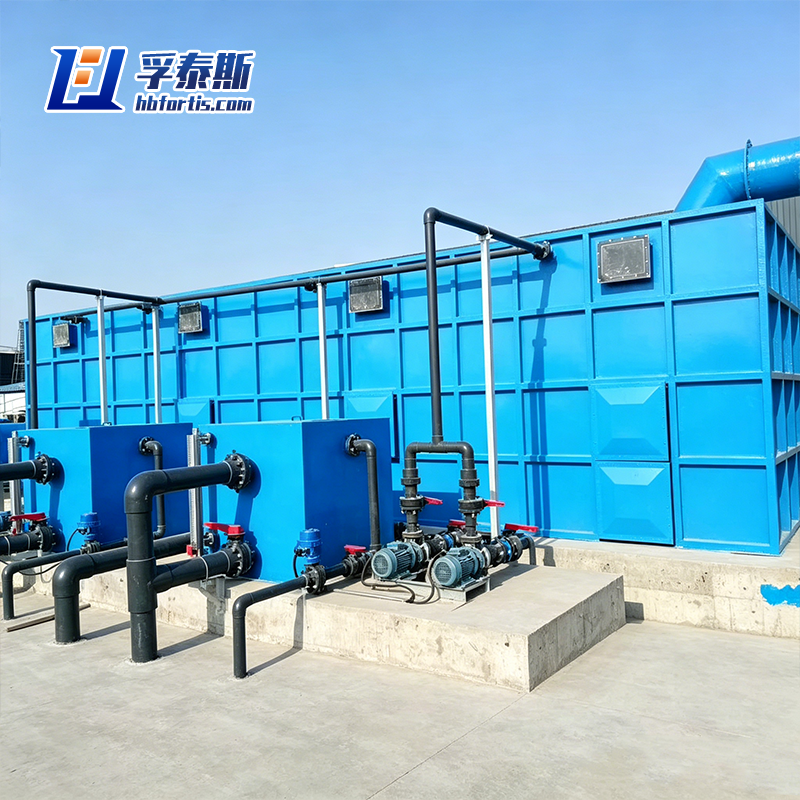
We supply high-performance FRP biological deodorization systems directly from our Chinese factory to wastewater treatment operators, waste management contractors, and industrial environmental engineers worldwide. Engineered for continuous, reliable odor removal, our biofilter units use a dual-phase biological process—gas absorption and microbial oxidation—to effectively degrade H₂S, mercaptans, and VOCs without the ongoing cost of chemical reagents, reducing operating expenses by up to 60% compared to packed tower scrubbers . The FRP construction delivers exceptional corrosion immunity against acidic condensate and alkaline wash water, with UV-stabilized panels that endure outdoor installation from tropical heat to freezing winters without cracking, warping, or structural degradation . Our modular, prefabricated design enables rapid site erection and easy media replacement, while the integrated moisture and pH control systems sustain optimal microbial activity for years of stable performance. As an end-to-end exporter, we provide custom sizing for any airflow rate, factory pre-assembly to reduce field labor, and full documentation including load calculations, installation manuals, and CE compliance certificates. Choose our bio-deodorization systems for a green, sustainable, and economically superior approach to industrial odor control that meets stringent environmental regulations while delivering long-term operational peace of mind.

Hebei Fortis Technology Co., Ltd Product Brochure
Product Advantages
Biologically Driven Odor Elimination with Zero Chemical Consumption
Unlike traditional chemical scrubbers that continuously consume caustic soda, hypochlorite, or activated carbon—generating recurring reagent bills and hazardous spent media—our FRP biological deodorization system operates on nature's own oxidation process. A specially formulated organic-inorganic composite packing media hosts a robust colony of autochthonous microorganisms that metabolize hydrogen sulfide, ammonia, and volatile organic compounds into harmless sulfate ions, water, and carbon dioxide. This biotrickling filtration mechanism achieves over 99% H₂S removal efficiency at inlet concentrations up to 500 ppm, all without a single kilogram of purchased chemicals, slashing your annual operating expenditure by up to 65% compared to wet scrubber alternatives.
Corrosion-Proof FRP Housing Engineered for Harsh Waste Gas Streams
The entire vessel—including the main tower, internal baffles, moisture elimination layers, and access manways—is fabricated from premium vinyl ester or isophthalic FRP, specifically formulated to withstand continuous exposure to highly acidic condensates, alkaline wash solutions, and salt-laden marine air. This structural choice eliminates the rust perforation, pitting, and coating delamination that plague carbon steel or galvanized units within 2–3 years of service. Our FRP shell maintains its flexural and tensile integrity across a pH range of 2–12 and temperatures from -20°C to 70°C, delivering a maintenance-free exterior lifespan exceeding 20 years with zero repainting or sacrificial anode replacement.
High-Efficiency Mass Transfer with Engineered Packing Media
Our system utilizes a dual-layered packing bed—a lower coarse section for particulate scrubbing and gas equalization, topped with a high-surface-area structured ceramic/polyurethane hybrid medium that offers over 200 m²/m³ of specific surface area. This design maximizes gas-liquid-microbe contact time while maintaining a low pressure drop of under 250 Pa per meter of bed depth, significantly reducing blower energy consumption. The media's open-pore structure resists clogging from biomass accumulation, and our built-in periodic backwash and nutrient-dosing cycles sustain peak biological activity, ensuring consistent outlet concentrations below 1 ppm H₂S even under fluctuating influent loads.
Application Scenarios
Municipal Sewage Treatment Plant
In the municipal sewage treatment plant, the biological odor removal system is mainly applied to the points where high concentrations of hydrogen sulfide, ammonia gas, and organic sulfur compounds are produced, such as the influent lift pump station, grit chamber, regulating tank, sludge concentration tank, and dewatering machine room. This system utilizes the professional bacteria attached to the biological filler to efficiently degrade the odor components into carbon dioxide and water, with an removal rate of over 95%. It has low operating costs, no chemical waste liquid, and can ensure long-term stable compliance with the factory boundary standards and the air quality of the surrounding communities.

Chemical and Pharmaceutical Industry
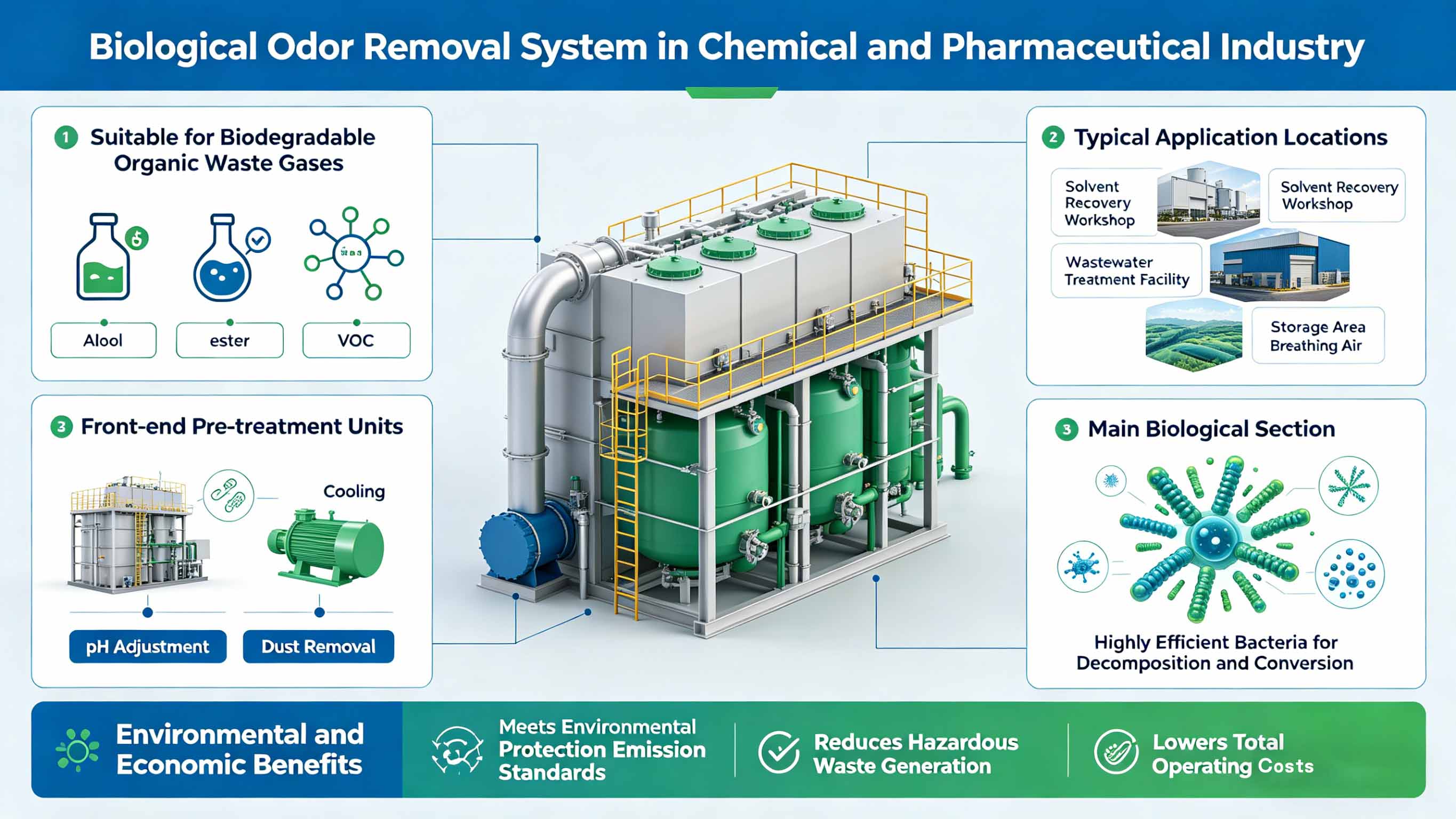
In the chemical and pharmaceutical industries, biological odor removal systems are suitable for the treatment of biodegradable organic waste gases, such as alcohols, esters, and some oxygen-containing VOCs. Typical locations include solvent recovery workshops, wastewater treatment facilities, and breathing air in storage areas. The system's front end can be equipped with pre-treatment units (such as pH adjustment, cooling, and dust removal) based on the characteristics of the waste gas. The main biological section utilizes highly efficient bacteria strains for decomposition and conversion. While meeting environmental protection emission standards, it significantly reduces the amount of hazardous waste generated and the total operating costs.
Waste Disposal and Solid Waste Facilities
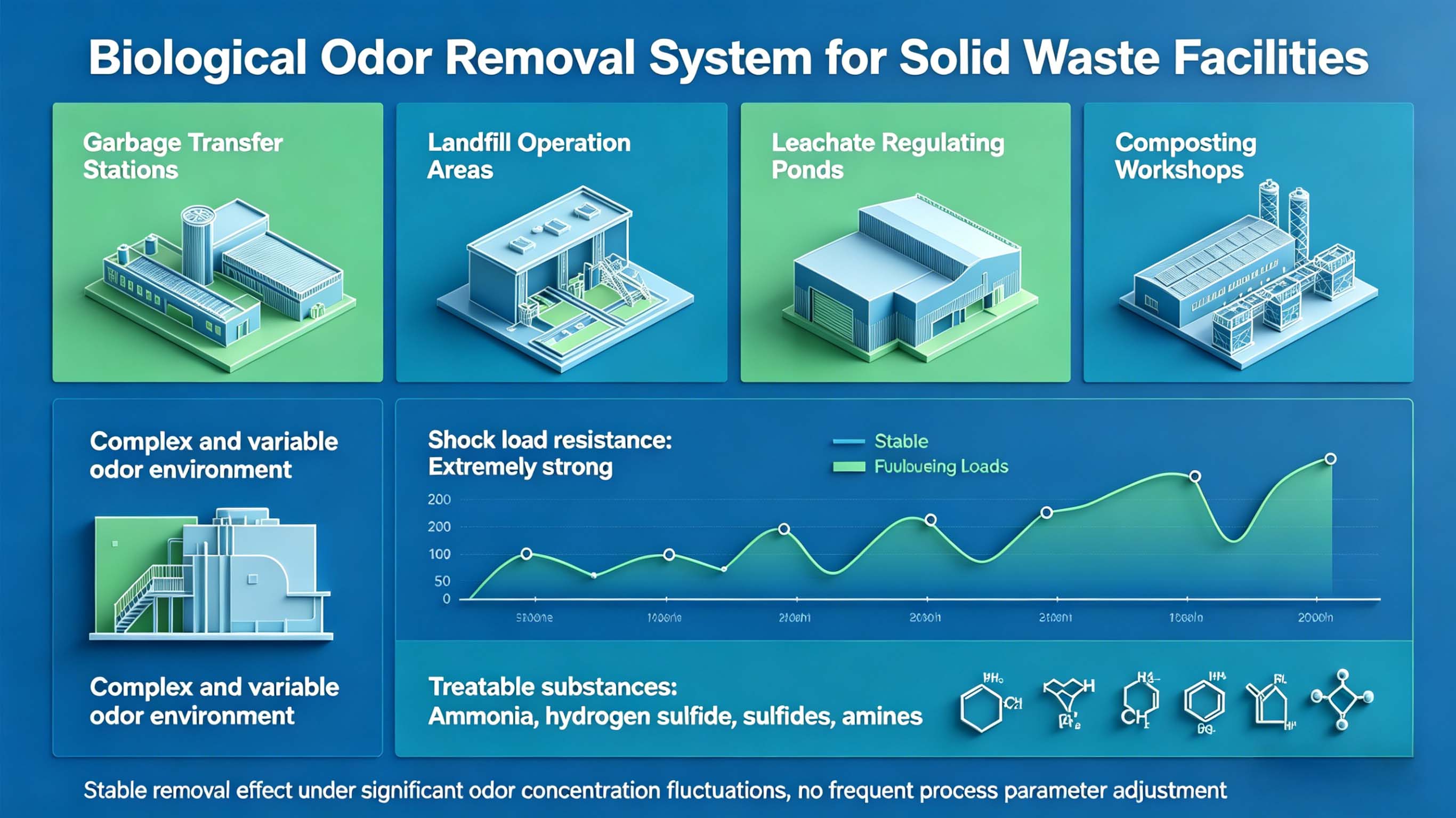
For the complex and variable odor environments in garbage transfer stations, landfill operation areas, leachate regulating ponds, and composting workshops, the biological odor removal system demonstrates extremely strong resistance to shock loads. It can simultaneously treat various mixed malodorous substances such as ammonia, hydrogen sulfide, sulfides, amines, etc. Even when the odor concentration fluctuates significantly, it still maintains a stable removal effect without the need for frequent adjustment of process parameters. It is particularly suitable for solid waste treatment scenarios with complex odor components and fluctuating concentrations.
Aquaculture and Agriculture
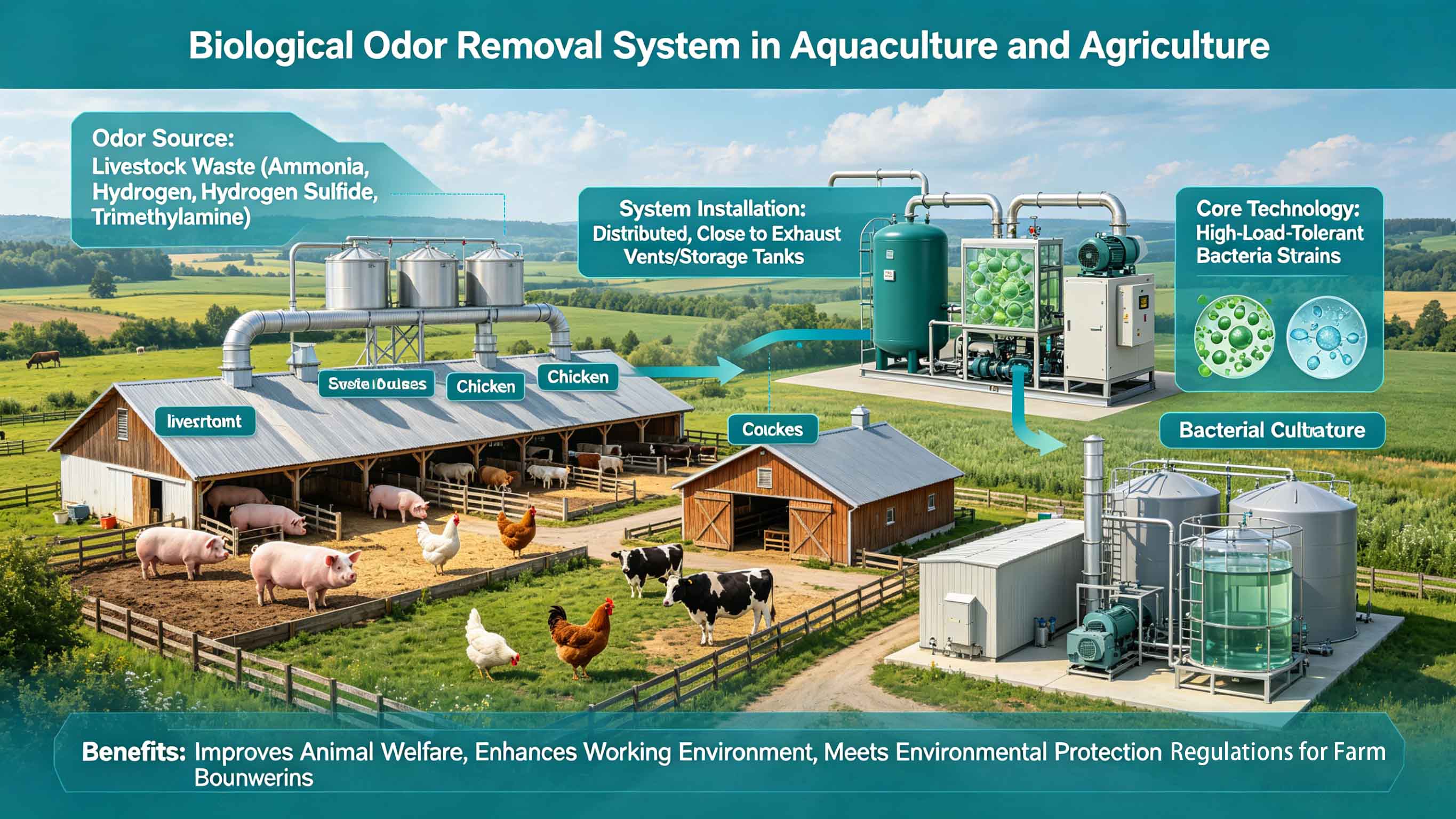
In livestock farms (pig houses, chicken houses, cattle houses) and organic fertilizer fermentation workshops, biological odor removal systems are used to treat high-concentration ammonia, hydrogen sulfide, and trimethylamine and other odorous substances from livestock waste. This system can be arranged in a distributed manner, installed close to the exhaust vents or the livestock waste storage tanks, using dedicated bacteria strains with high load tolerance to achieve low-cost and continuous odor removal. This not only significantly improves animal welfare and the working environment but also helps breeding enterprises easily meet the strict requirements of environmental protection regulations for the odor concentration at the farm boundary.
Related Products

FRP Sewage Treatment Plant Exporter – Factory Direct for Resorts & Housing Projects
Factory-direct FRP wastewater treatment systems for resorts, construction camps & remote communities. ISO-certified exporter. Quick delivery & custom sizing. Request a quote.

FRP Domestic Sewage Treatment Plant Supplier – For Villa Projects | Factory Direct
China factory offers corrosion-resistant FRP sewage systems for off-grid hotels & housing estates. ISO certified. Custom flow rates. Fast shipping. Request bulk export quote now.

GRP Sewage Treatment Plant for Off-Grid Housing & Resorts | Factory Direct Exporter
Factory-direct GRP domestic sewage treatment equipment for remote villas, eco-lodges, and coastal resorts. BS/EN standard certified. Modular design, 20-year shell warranty. Get site-specific layout drawing in 24 hrs.

GRP Pumping Station Exporter for Sewage & Stormwater | China Direct Plant
Skip intermediaries. Source GRP prefab pumping stations directly from Chinese ISO-certified plant. Customized DN1200-4000 for wastewater treatment, tunnel drainage, and flood control. 15-day delivery. Get site-specific CAD drawings now.
Contact us immediately to discuss your product project requirements
Navigation
Navigation
Contact Us
Tel.: +86 189 3266 2725
E-mail: sale@hbfortis.com
Add.: No.8-1, Zhenxing Street, Matun Town, Zaoqiang County, Hengshui City, Hebei Province
Get in Touch
Get in Touch