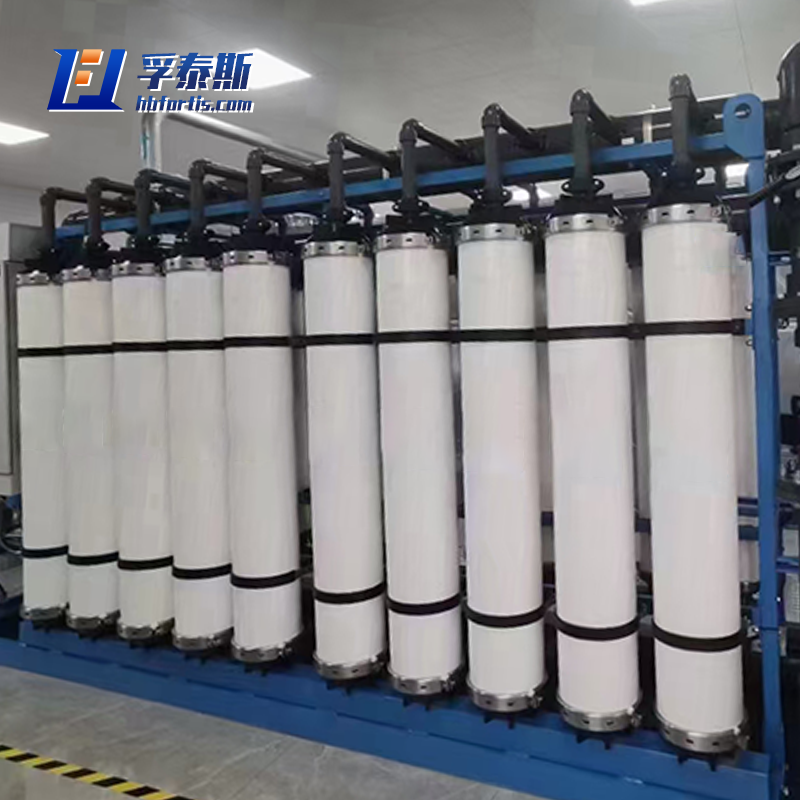
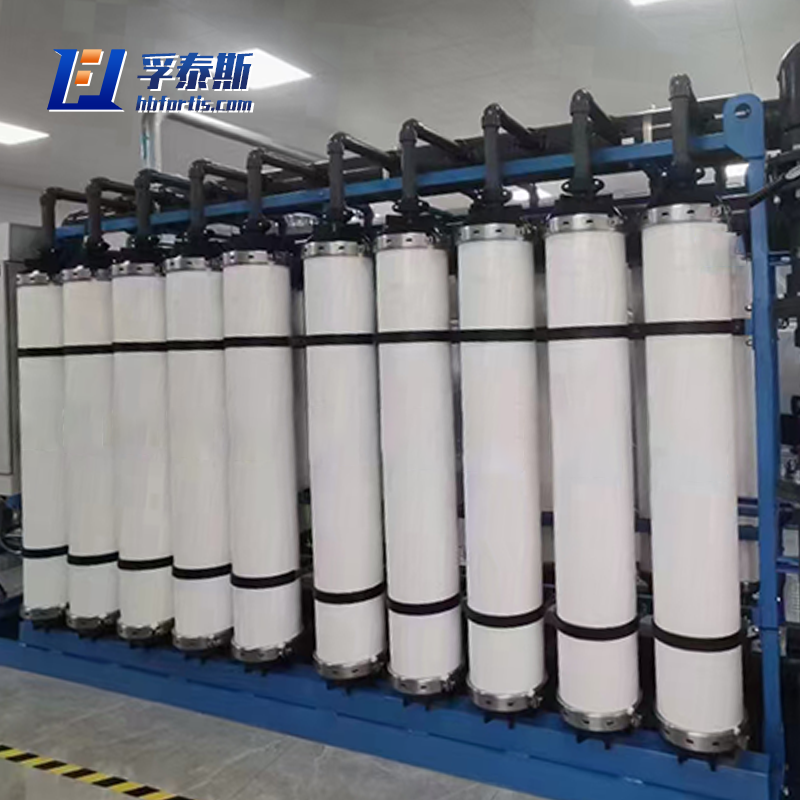
FRP water treatment equipment refers to a type of equipment made with glass fiber reinforced plastic as the core material. It is mainly used to replace traditional metals or concrete to solve the common problems of corrosion and high humidity in the water treatment industry. Thanks to the characteristics of FRP materials such as light weight, high strength, resistance to acid, alkali and salt corrosion, anti-aging and no secondary pollution, these equipment are widely used in municipal, industrial, seawater desalination and civilian fields. Their specific forms include filtration/softening tanks, reverse osmosis pressure vessels, integrated water purification equipment and sewage lift stations, etc. The core value of these equipment lies in providing users with more durable, more economical and water quality-ensuring comprehensive solutions through extremely low maintenance costs and a service life of up to 30 years.

Hebei Fortis Technology Co., Ltd Product Brochure
Product Advantages
FRP pressure vessels weigh significantly less than comparable stainless steel housings, which directly lowers ocean freight charges for export shipments and simplifies on-site handling where cranes or heavy lifting equipment are unavailable. A lighter system also reduces structural loading requirements on skids and building floors, making retrofits into existing plants more practical. For importers distributing across multiple markets, the weight advantage compounds across every container load.
Modern FRP windings are engineered to withstand the elevated operating pressures required by reverse osmosis membranes, typically in the 300–1000 psi range depending on configuration. The filament-wound composite structure resists creep and dimensional distortion under sustained pressure cycling, maintaining a consistent seal at the end caps. This reliability matters in continuous-duty applications such as boiler feedwater treatment and process water for food and beverage lines, where pressure fluctuations are routine.
Because FRP does not corrode, the housing requires no periodic repainting, passivation, or cathodic protection—maintenance attention shifts to membranes, pumps, and valves rather than the pressure vessel itself. The smooth inner bore also resists biofilm adhesion better than roughened metal surfaces, supporting more stable membrane performance between cleanings. For export markets where skilled maintenance labor is scarce or costly, this low-touch durability is a decisive operational advantage.
Application Scenarios
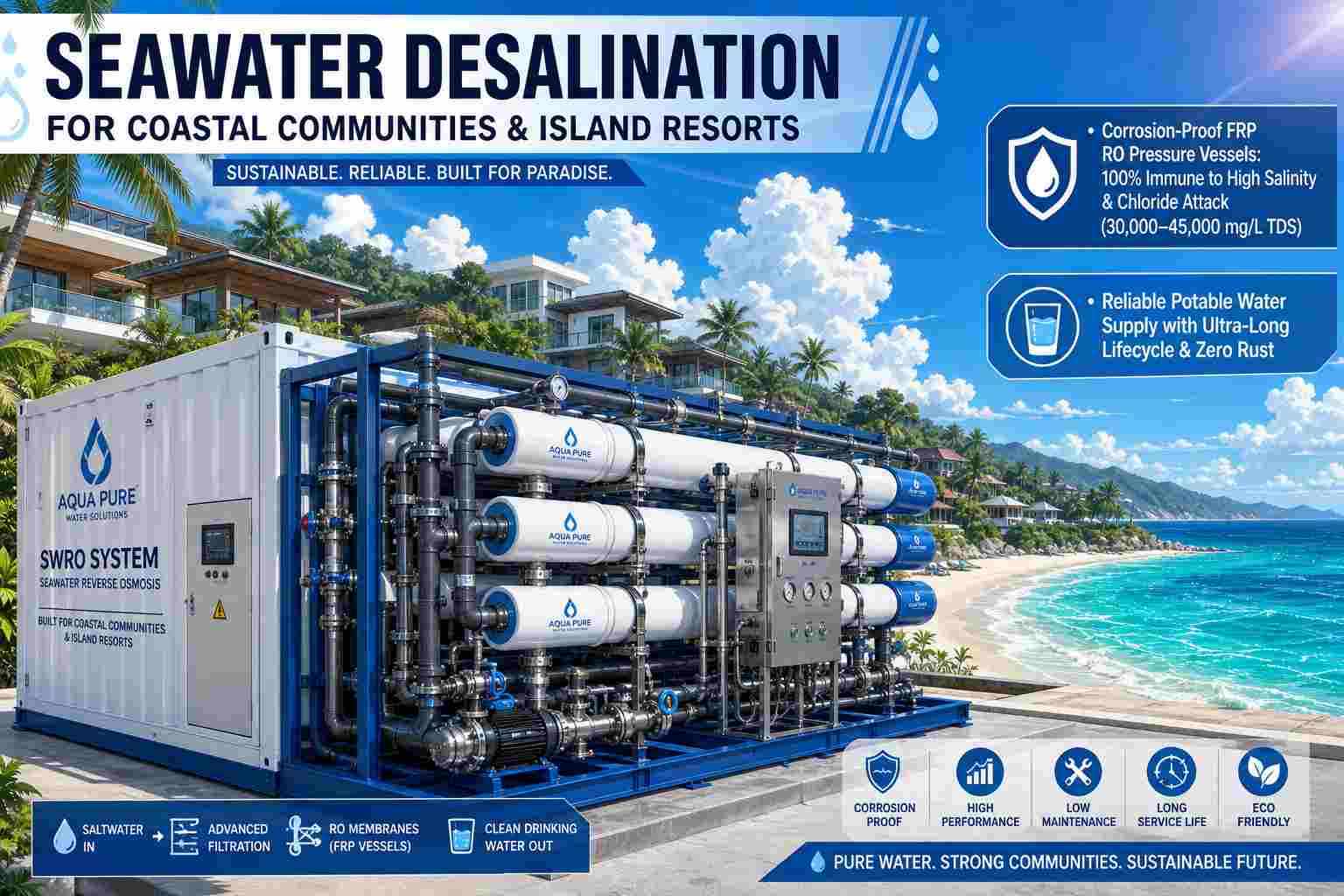
Coastal towns, island resorts, and offshore facilities that draw directly from the sea face a feed stream with total dissolved solids typically in the 30,000–45,000 mg/L range and chloride concentrations that aggressively attack metallic components. An FRP RO system deployed as a containerized or skid-mounted desalination train handles this duty with pressure vessels that are inherently immune to chloride-induced pitting and stress corrosion cracking—failure modes that shorten the life of stainless steel housings in seawater service. The system solves the dual problem of source water scarcity and material degradation: it converts seawater to potable or irrigation-grade permeate while the composite vessels withstand the corrosive environment without protective coatings or frequent replacement. For island resorts and coastal municipalities, the practical value is a continuous water supply independent of unreliable rainfall or expensive tanker deliveries, with a pressure vessel lifecycle that outlasts conventional metal housings and reduces long-term capital replacement costs. For the factory-direct exporter, seawater desalination is a flagship reference application where FRP's material advantages are most visible and most valued by project specifiers.
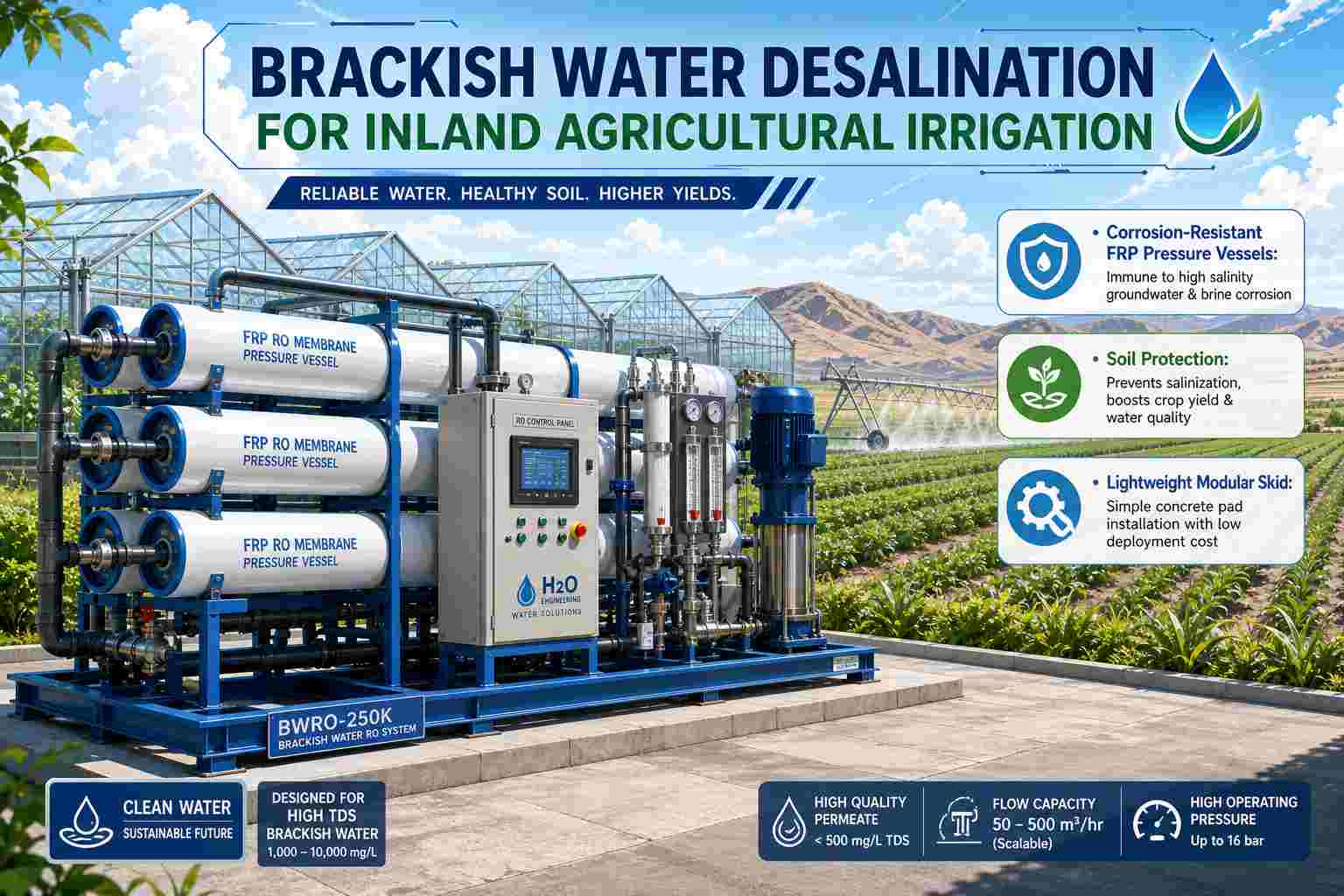
Inland farming regions often rely on groundwater with elevated salinity that, while unsuitable for direct irrigation, can be treated to protect soil health and crop yield. An FRP RO system installed at the farm or cooperative level treats brackish well water to reduce TDS to levels tolerated by sensitive crops, with the composite housings resisting the corrosive effects of the concentrated brine stream generated during the process. The problem addressed is soil salinization and yield loss caused by irrigating with marginally saline water over multiple seasons—a slow degradation that farmers often struggle to reverse. The practical value is measurable: treated water supports higher-value crops, reduces the need for field leaching and gypsum application, and extends the productive life of the land. For exporters serving agricultural markets in the Middle East, North Africa, and parts of South Asia, this scenario is compelling because the lightweight FRP construction allows systems to be installed on simple concrete pads without heavy lifting equipment, keeping deployment costs within reach of cooperative-scale buyers.
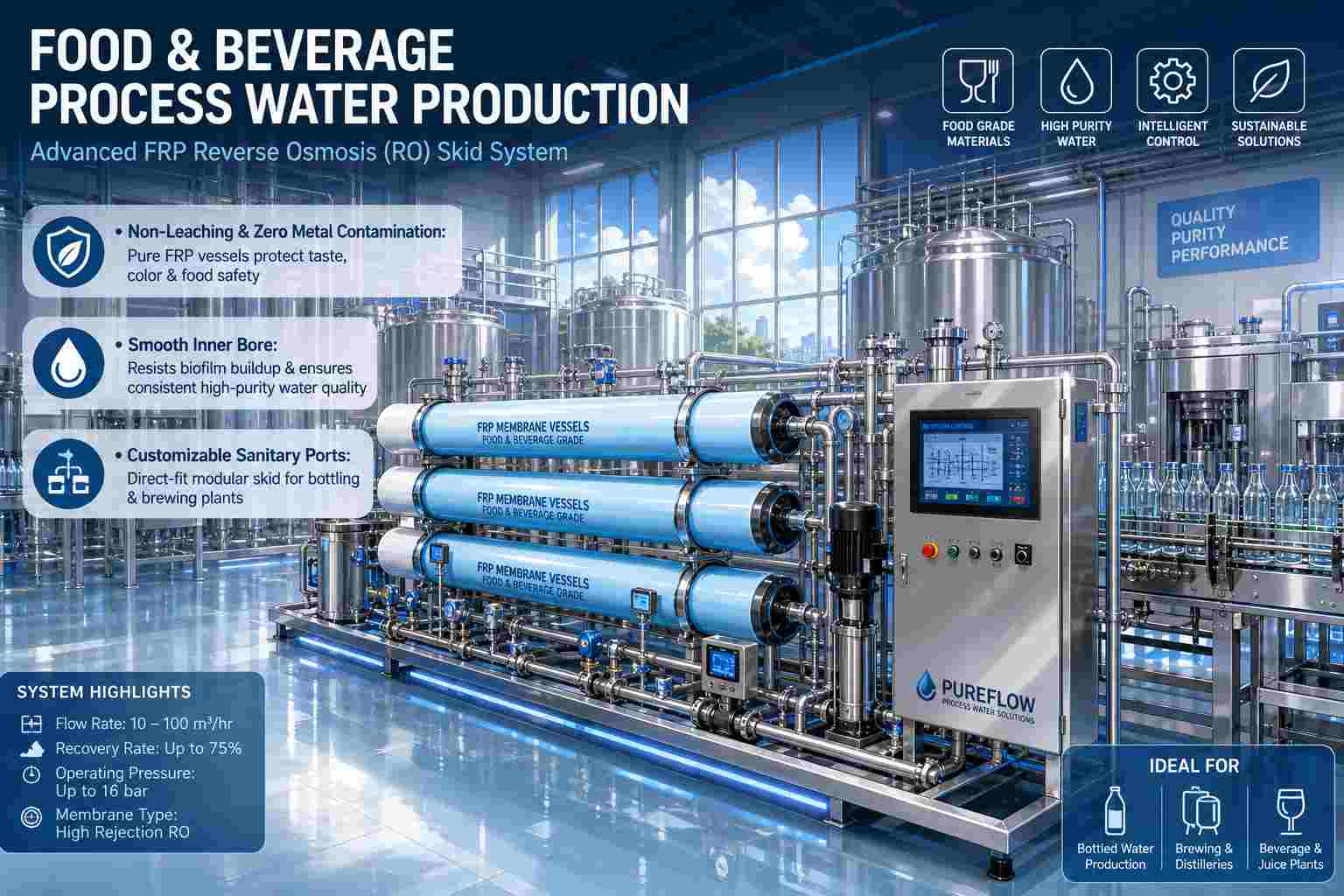
Bottling plants, breweries, and food processors require process water with consistent mineral content and assured microbiological quality, and they often draw from municipal or borehole sources whose composition varies seasonally. An FRP RO system deployed in these facilities produces a stable permeate stream, with the smooth internal bore of the composite vessel resisting biofilm adhesion and the material itself not leaching metallic ions that could affect taste or product color. The problem solved is batch-to-batch variability in finished product quality caused by fluctuating feedwater chemistry, as well as the compliance risk of exceeding contaminant limits in food-contact water. The practical value is a reliable, repeatable process water supply that supports product consistency and simplifies regulatory documentation. For exporters targeting food-grade markets, the FRP construction supports hygiene and material-traceability requirements, while the factory-direct channel allows vessel dimensions and port configurations to be adjusted to fit existing plant layouts without the lead times imposed by trading intermediaries.
Related Products

FRP Sewage Treatment Plant for Hotels & Resorts | Factory-Direct Export
Turnkey FRP sewage solutions for hospitality & residential projects. As a China-based exporter, we provide factory-direct pricing on corrosion-proof, quick-install systems. Get a quote.

FRP Sewage Treatment Plant for Resorts & Villas | Factory Direct Exporter
China factory-direct exporter of FRP sewage treatment plants for off-grid resorts, worker camps & housing estates. Compact, odor-free, 20-year shell life. Get a quote with layout drawing in 24h

FRP Integrated Pump Station Exporter | Municipal & Stormwater Lift
China-based FRP integrated pump station supplier for municipal sewage lift, stormwater transfer & industrial park drainage. Factory-prefabricated, tested, export-ready.

FRP Reverse Osmosis RO System for Brackish Water & Food Processing | Factory Direct Exporter
Source FRP reverse osmosis systems directly from our factory. Built for corrosive environments with durable membrane housings. Ideal for food processing, bottling, and brackish water desalination. Request a quote.
Contact us immediately to discuss your product project requirements
Navigation
Navigation
Contact Us
Tel.: +86 189 3266 2725
E-mail: sale@hbfortis.com
Add.: No.8-1, Zhenxing Street, Matun Town, Zaoqiang County, Hengshui City, Hebei Province
Get in Touch
Get in Touch