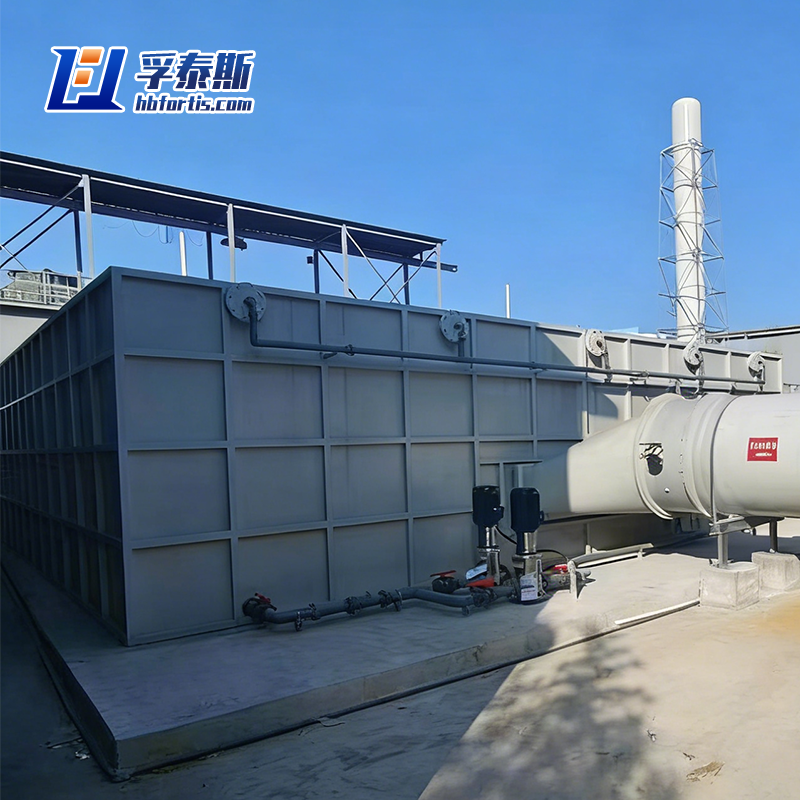
Our biological deodorization system removes H₂S, ammonia, and VOCs using natural microbial degradation. Ideal for wastewater treatment plants, landfills, and food processing facilities. Low energy consumption, no chemical additives, and up to 99% odor removal efficiency. Customizable biofilter solutions with low maintenance and long service life. Compliant with EPA and EU emission standards. Reduce your carbon footprint while improving workplace air quality. Get a free technical consultation and odor assessment today.

Hebei Fortis Technology Co., Ltd Product Brochure
Product Advantages
The core advantage of the Biological Deodorization System lies in achieving efficient and environmentally friendly odor control at an extremely low operating cost. This system utilizes natural microorganisms to completely decompose harmful gases such as hydrogen sulfide, ammonia, and VOCs into harmless substances, with an removal rate of over 95%. It does not produce chemical waste or secondary pollution. Compared to traditional processes, it does not require frequent replacement of consumables, has significantly reduced energy consumption, and features strong resistance to shock loads, as well as simple maintenance. It is particularly suitable for continuous odor-producing scenarios in wastewater treatment plants, waste disposal stations, livestock and food processing facilities, etc., and is an ideal green solution for achieving long-term stable compliance with emission standards.
Application Scenarios
Municipal Sewage Treatment Plant
In the municipal sewage treatment plant, the biological odor removal system is mainly applied to the points where high concentrations of hydrogen sulfide, ammonia gas, and organic sulfur compounds are produced, such as the influent lift pump station, grit chamber, regulating tank, sludge concentration tank, and dewatering machine room. This system utilizes the professional bacteria attached to the biological filler to efficiently degrade the odor components into carbon dioxide and water, with an removal rate of over 95%. It has low operating costs, no chemical waste liquid, and can ensure long-term stable compliance with the factory boundary standards and the air quality of the surrounding communities.

Chemical and Pharmaceutical Industry
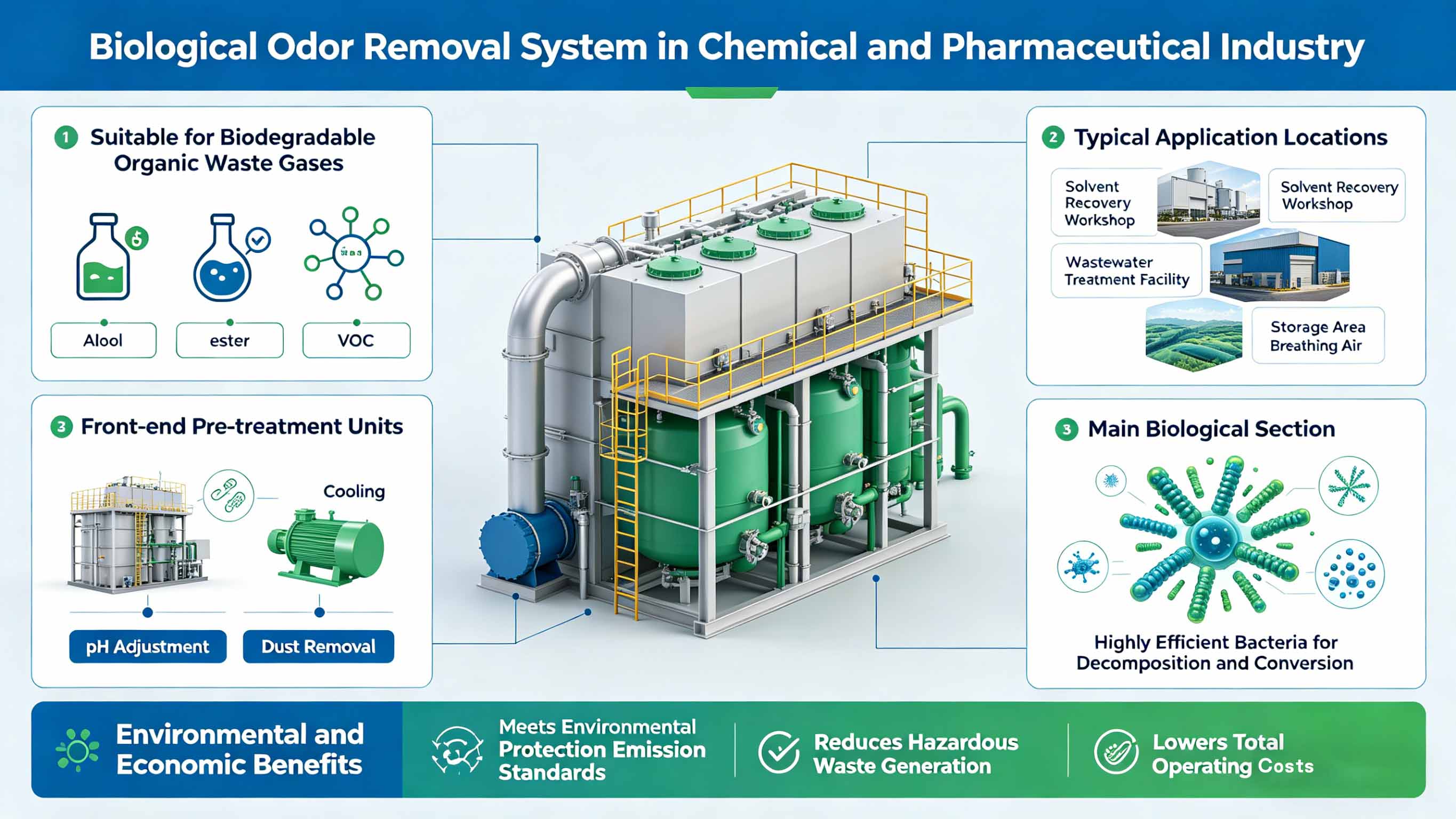
In the chemical and pharmaceutical industries, biological odor removal systems are suitable for the treatment of biodegradable organic waste gases, such as alcohols, esters, and some oxygen-containing VOCs. Typical locations include solvent recovery workshops, wastewater treatment facilities, and breathing air in storage areas. The system's front end can be equipped with pre-treatment units (such as pH adjustment, cooling, and dust removal) based on the characteristics of the waste gas. The main biological section utilizes highly efficient bacteria strains for decomposition and conversion. While meeting environmental protection emission standards, it significantly reduces the amount of hazardous waste generated and the total operating costs.
Waste Disposal and Solid Waste Facilities
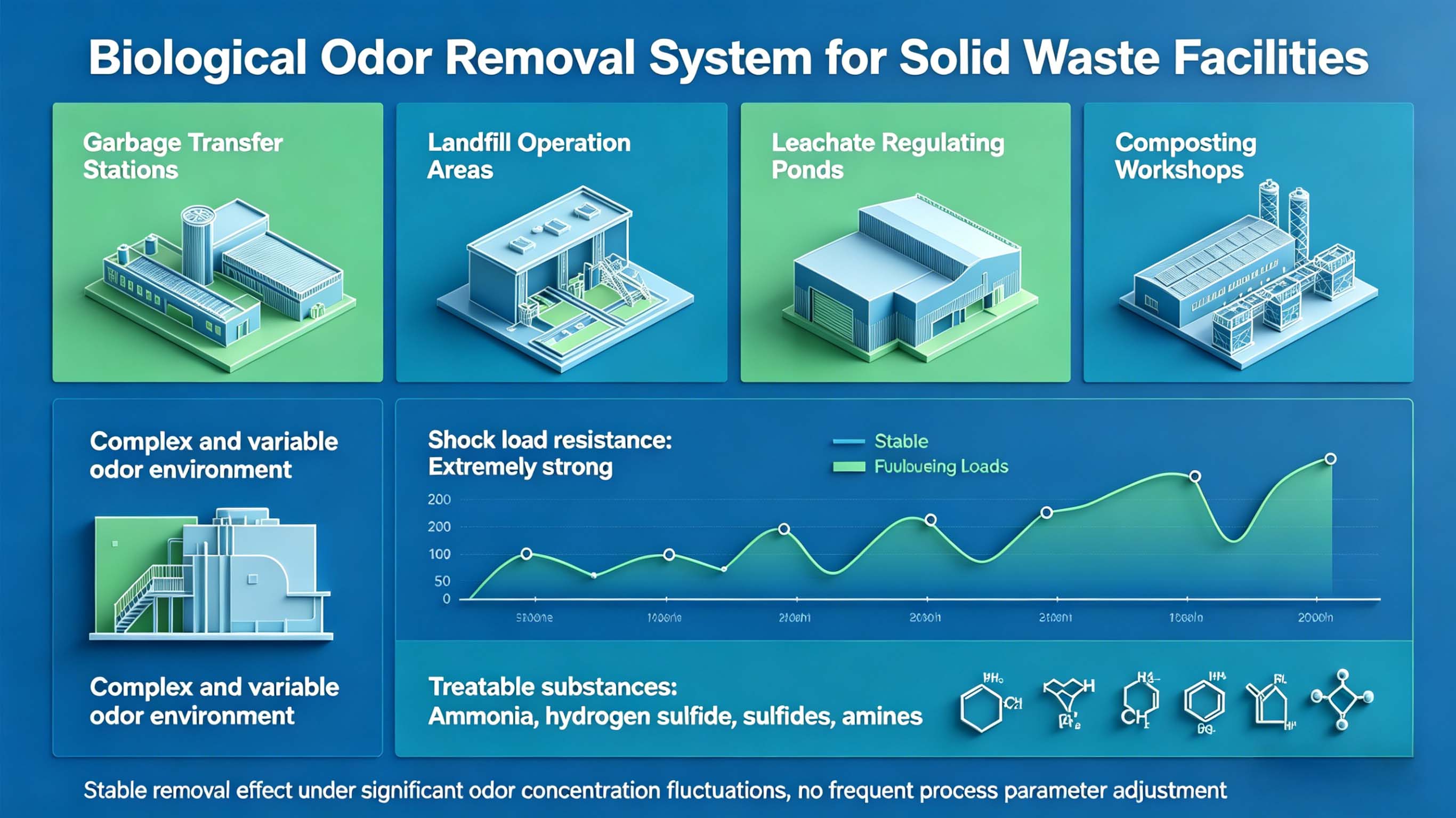
For the complex and variable odor environments in garbage transfer stations, landfill operation areas, leachate regulating ponds, and composting workshops, the biological odor removal system demonstrates extremely strong resistance to shock loads. It can simultaneously treat various mixed malodorous substances such as ammonia, hydrogen sulfide, sulfides, amines, etc. Even when the odor concentration fluctuates significantly, it still maintains a stable removal effect without the need for frequent adjustment of process parameters. It is particularly suitable for solid waste treatment scenarios with complex odor components and fluctuating concentrations.
Aquaculture and Agriculture
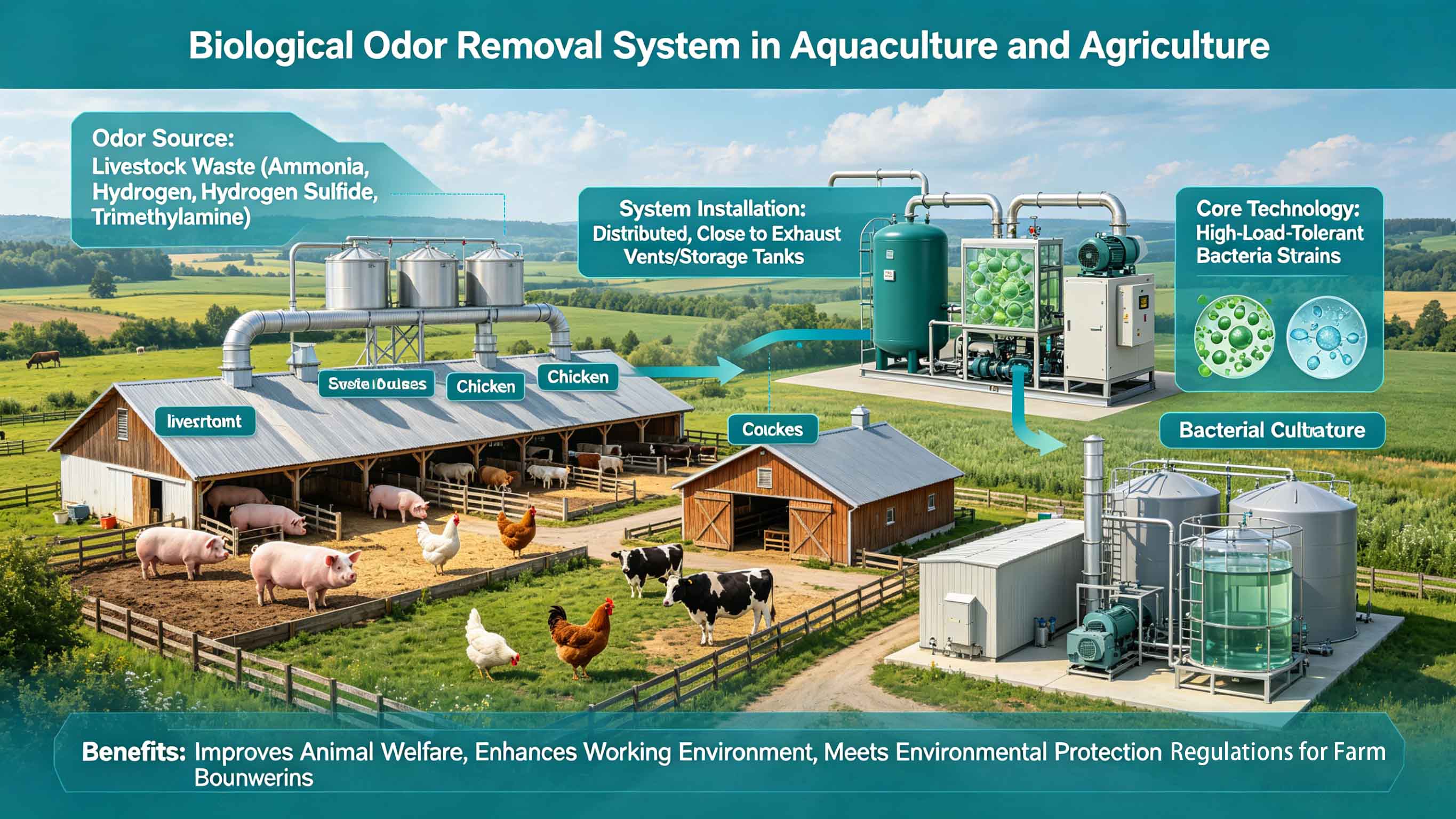
In livestock farms (pig houses, chicken houses, cattle houses) and organic fertilizer fermentation workshops, biological odor removal systems are used to treat high-concentration ammonia, hydrogen sulfide, and trimethylamine and other odorous substances from livestock waste. This system can be arranged in a distributed manner, installed close to the exhaust vents or the livestock waste storage tanks, using dedicated bacteria strains with high load tolerance to achieve low-cost and continuous odor removal. This not only significantly improves animal welfare and the working environment but also helps breeding enterprises easily meet the strict requirements of environmental protection regulations for the odor concentration at the farm boundary.
Related Products

FRP Sewage Treatment Plant Exporter – Factory Direct for Resorts & Housing Projects
Factory-direct FRP wastewater treatment systems for resorts, construction camps & remote communities. ISO-certified exporter. Quick delivery & custom sizing. Request a quote.

FRP Domestic Sewage Treatment Plant Supplier – For Villa Projects | Factory Direct
China factory offers corrosion-resistant FRP sewage systems for off-grid hotels & housing estates. ISO certified. Custom flow rates. Fast shipping. Request bulk export quote now.

GRP Sewage Treatment Plant for Off-Grid Housing & Resorts | Factory Direct Exporter
Factory-direct GRP domestic sewage treatment equipment for remote villas, eco-lodges, and coastal resorts. BS/EN standard certified. Modular design, 20-year shell warranty. Get site-specific layout drawing in 24 hrs.

GRP Pumping Station Exporter for Sewage & Stormwater | China Direct Plant
Skip intermediaries. Source GRP prefab pumping stations directly from Chinese ISO-certified plant. Customized DN1200-4000 for wastewater treatment, tunnel drainage, and flood control. 15-day delivery. Get site-specific CAD drawings now.
Contact us immediately to discuss your product project requirements
Navigation
Navigation
Contact Us
Tel.: +86 189 3266 2725
E-mail: sale@hbfortis.com
Add.: No.8-1, Zhenxing Street, Matun Town, Zaoqiang County, Hengshui City, Hebei Province
Get in Touch
Get in Touch