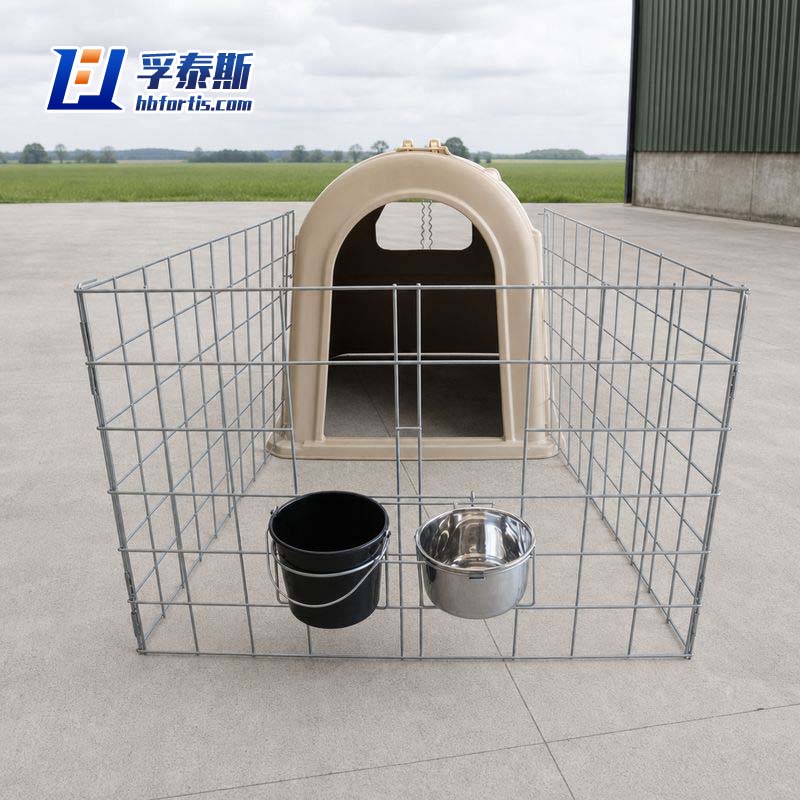
As a leading composite material calf hutch manufacturer and exporter in China, we provide factory-direct solutions designed for modern dairy farm management. Our UV-stabilized composite hutches are engineered for superior durability and ease of disinfection, effectively reducing calf mortality and respiratory stress. Whether you require standard individual pens or customized movable calf housing systems, our direct-supply model ensures competitive pricing and reliable shipping for global agricultural distributors and large-scale farms.We specialize in manufacturing high-density composite material calf hutches for export. Designed with veterinarians and dairy farmers in mind, our hutches offer superior thermal insulation compared to traditional polyethylene, ensuring a healthier microclimate for calves in extreme weather. As a direct supplier, we eliminate middlemen margins, offering container-load pricing and customizable ventilation configurations for professional calf rearing operations.

Hebei Fortis Technology Co., Ltd Product Brochure
Product Advantages
FRP (Fiber-Reinforced Polymer) composite material offers exceptional resistance to corrosion caused by ammonia, manure acids, urine, and common dairy disinfectants. Unlike galvanized steel or wood, which degrade rapidly in harsh barn environments, FRP hutches maintain structural integrity and surface quality over many years of continuous use. This chemical stability significantly extends the service life of the hutch, reducing replacement frequency and long-term capital expenditure for dairy operations. For export markets with humid or coastal climates, this advantage is particularly critical, as FRP will not rust or rot even under prolonged exposure to moisture and aggressive cleaning agents.
The molded FRP surface is smooth, non-porous, and free of seams or crevices where bacteria, viruses, and parasites can harbor. This design enables rapid, thorough cleaning and disinfection between calf groups, a critical requirement for biosecurity protocols on modern dairy farms. Unlike wood, which absorbs moisture and organic matter, or rough concrete, which traps pathogens, FRP surfaces dry quickly and resist biofilm formation. Improved hygiene directly reduces the incidence of scours and respiratory disease, lowering calf mortality rates and antibiotic use—key selling points for health-conscious dairy operations and for markets with strict animal welfare regulations.
FRP molding allows complex shapes, integrated ribs, rounded edges, and built-in ventilation features to be produced in a single process, without secondary welding or assembly. This design freedom enables factory-direct suppliers to offer customized dimensions, colors, ventilation configurations, and branding to meet specific importer requirements. Molded-in colors eliminate the need for painting and prevent chipping. For B2B buyers seeking private-label or OEM calf hutches, FRP composite construction supports efficient small-to-medium batch customization while maintaining consistent quality—a strong competitive advantage for exporters serving diverse global markets.
Application Scenarios
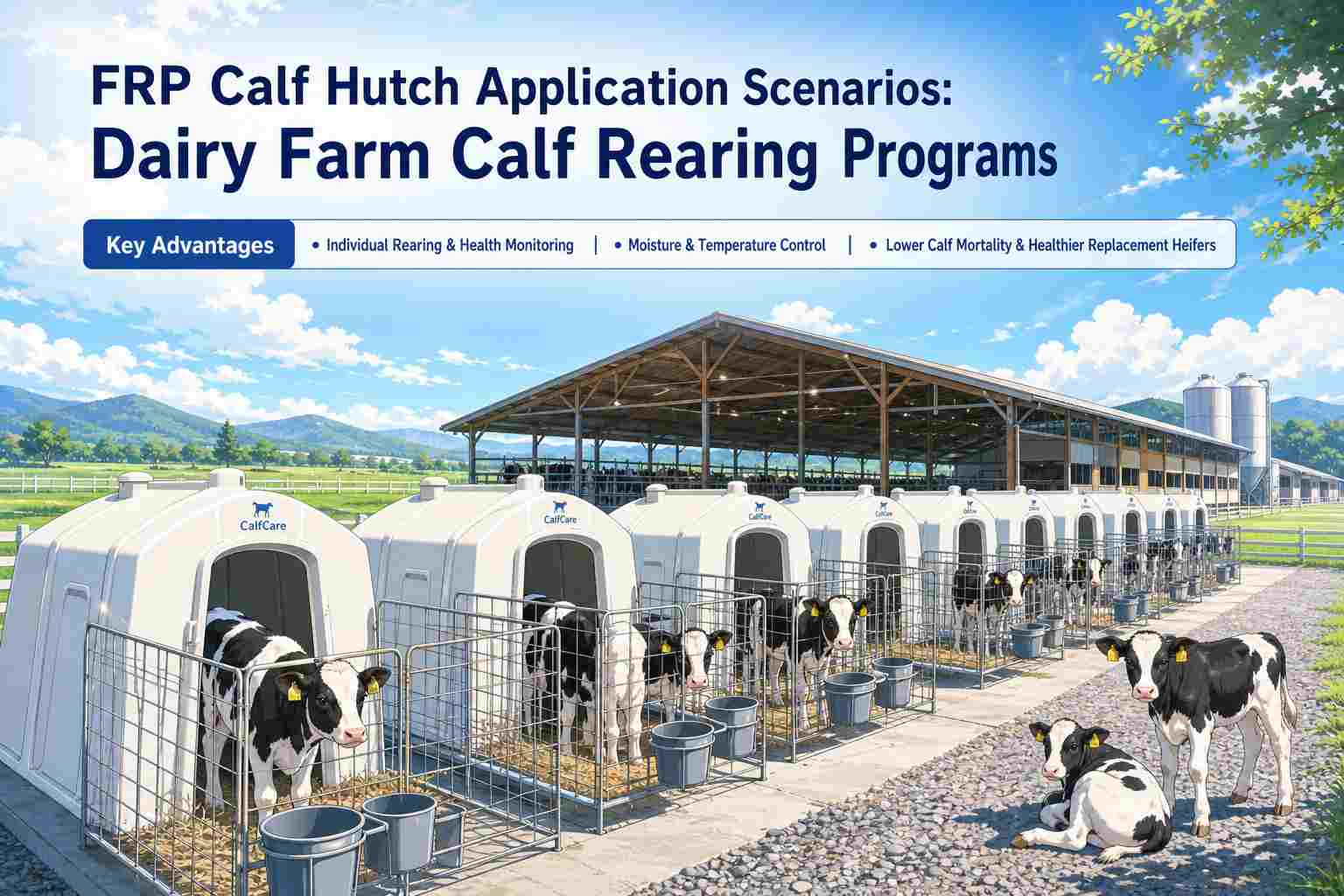
On commercial dairy farms, FRP calf hutches are typically deployed in rows or clusters outdoors, often on a gravel or concrete pad near the main barn. Each hutch houses a single calf during the pre-weaning period, allowing workers to feed, monitor, and treat calves individually. The smooth fiberglass surface and insulated walls help control moisture and temperature, which directly addresses the common problems of respiratory disease and scours in group housing. The practical value is clear: lower calf mortality, reduced veterinary costs, and healthier replacement heifers entering the milking herd.
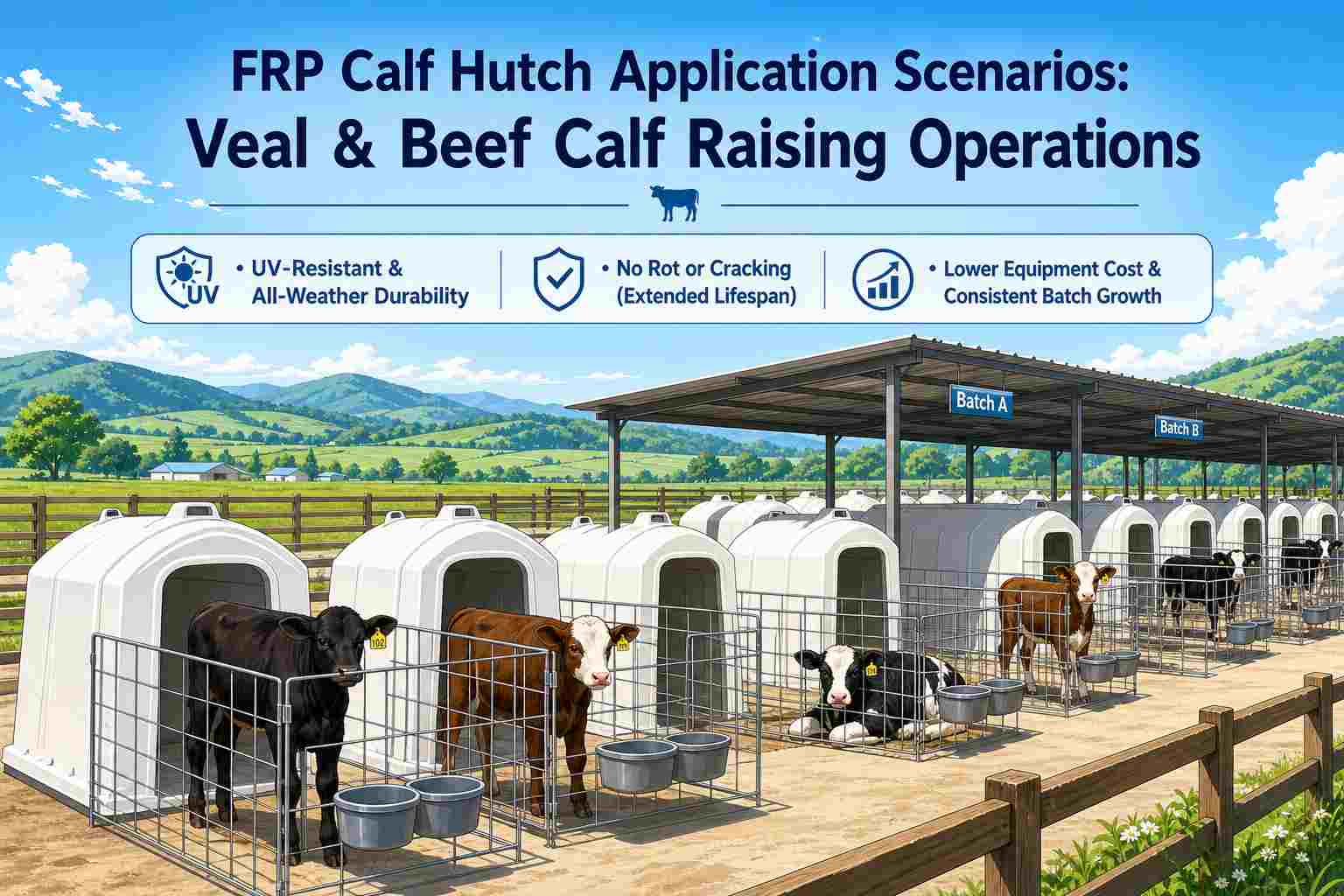
In veal and beef calf operations, FRP calf hutches are used to raise calves in controlled individual units before they are moved to group pens or finishing systems. The hutches are often placed in open lots or under simple shade structures, where their UV-resistant fiberglass body withstands continuous sun and rain exposure. This solves the issue of wooden hutches rotting within a few seasons and plastic hutches becoming brittle and cracking. The result is a longer replacement cycle, lower annual equipment costs, and more consistent calf performance across batches.
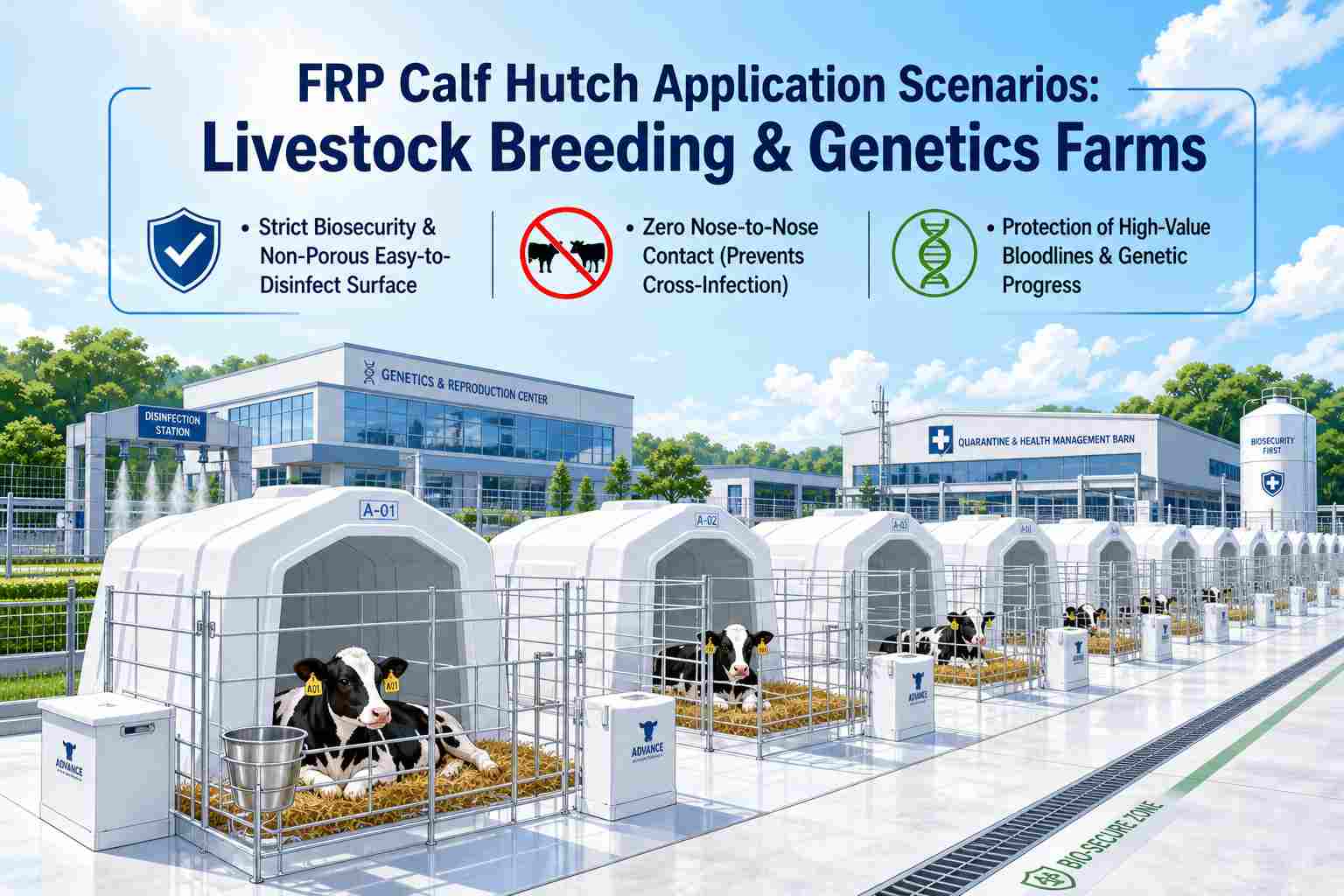
Breeding farms and genetics companies use FRP calf hutches to isolate valuable newborn calves from the general herd. These calves often carry high genetic value and require strict biosecurity. The non-porous, easy-to-disinfect surface supports rigorous hygiene protocols, while the individual housing design prevents nose-to-nose contact between calves. This reduces the risk of disease transmission during the most vulnerable first weeks of life. The actual value is protection of high-value bloodlines, better survival rates, and more reliable genetic progress for the breeding program.
Related Products

Factory Direct GFRP Calf Hutch for Calf Rearing Pre-Weaned Calves
Direct from China factory. Durable GFRP calf hutches for healthy calf rearing. Smooth, hygienic surface reduces disease risk. Export-grade quality & ready to ship.

FRP Calf Hutch Supplier & Exporter | Durable Calf Housing for Dairy & Beef Farms
Factory-direct FRP calf hutch exporter. Durable, weatherproof housing for dairy and beef calves. Custom sizes, bulk orders, fast global shipping. Get a quote today.

FRP Calf Hutch for Dairy Farm & Livestock Housing | China Factory Direct Exporter
Durable FRP calf hutch for dairy farms, calf rearing & livestock housing. Factory-direct exporter in China. Custom sizes, bulk supply, fast shipping.

FRP Telecom Protective Cover for 5G Base Stations China Factory Direct Supplier
China factory-direct exporter of FRP telecom protective covers for 5G base stations, outdoor cabinets & antenna units. Non-conductive, corrosion-proof, custom-molded. Bulk orders supported.
Contact us immediately to discuss your product project requirements
Navigation
Navigation
Contact Us
Tel.: +86 189 3266 2725
E-mail: sale@hbfortis.com
Add.: No.8-1, Zhenxing Street, Matun Town, Zaoqiang County, Hengshui City, Hebei Province
Get in Touch
Get in Touch