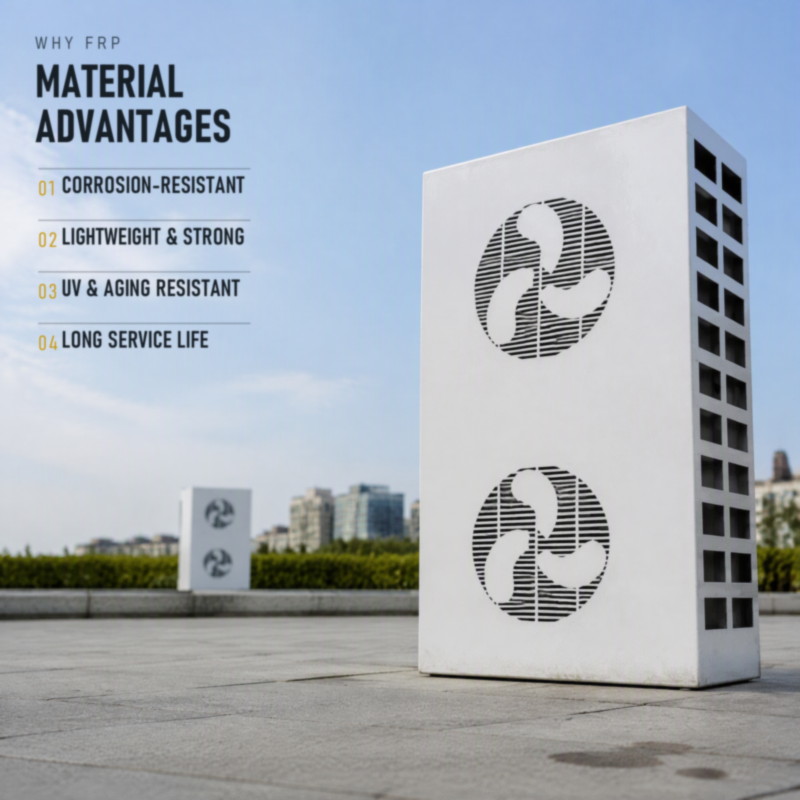
We are a China-based factory-direct exporter and supplier of FRP air conditioner protective covers, engineered for coastal, marine, and industrial HVAC applications where corrosion and UV exposure are critical concerns. Our fiberglass-reinforced plastic covers are custom-molded, weather-resistant, and suitable for bulk project orders. As a direct manufacturer, we provide stable lead times, OEM support, and export documentation for global buyers.As a China factory-direct exporter and supplier, we specialize in FRP air conditioner protective covers designed for coastal, marine, and industrial HVAC environments. Our fiberglass-reinforced plastic covers deliver long-term resistance to salt spray, chemicals, and UV radiation, making them ideal for offshore platforms, seaside buildings, and chemical facilities. We support custom molding, bulk orders, and OEM branding, with direct factory pricing and full export documentation for international buyers.

Hebei Fortis Technology Co., Ltd Product Brochure
Product Advantages
FRP (Fiberglass Reinforced Plastic) air conditioner protective covers are engineered to withstand aggressive environments where ordinary metal or plastic covers fail. Unlike steel, which rusts rapidly under salt spray, humidity, or chemical exposure, FRP resists corrosion caused by seawater, acid rain, industrial fumes, and alkaline cleaning agents. This makes the cover particularly suitable for coastal buildings, offshore platforms, marine vessels, and chemical plants, where long-term exposure to moisture and airborne contaminants would quickly degrade conventional materials. The result is a protective cover that maintains its structural integrity and appearance over many years of service.
FRP covers are formulated with UV stabilizers and weather-resistant resins, allowing them to endure prolonged sunlight, temperature fluctuations, and heavy rainfall without cracking, fading, or becoming brittle. In tropical, desert, or high-altitude regions where UV intensity is strong, FRP outperforms many thermoplastics that degrade under continuous solar radiation. This durability ensures that the air conditioning unit beneath remains shielded year-round, reducing maintenance frequency and extending the lifespan of the equipment itself.
FRP is a highly moldable material, allowing manufacturers to produce air conditioner protective covers in virtually any shape, size, or color to match specific unit dimensions and architectural requirements. Complex geometries, integrated ventilation louvers, hinged access panels, and mounting flanges can all be incorporated directly into the mold, eliminating the need for secondary fabrication. For OEM and project-based buyers, this means covers can be tailored precisely to different AC models, outdoor unit configurations, or branding specifications, while maintaining consistent quality across bulk production runs.
Application Scenarios
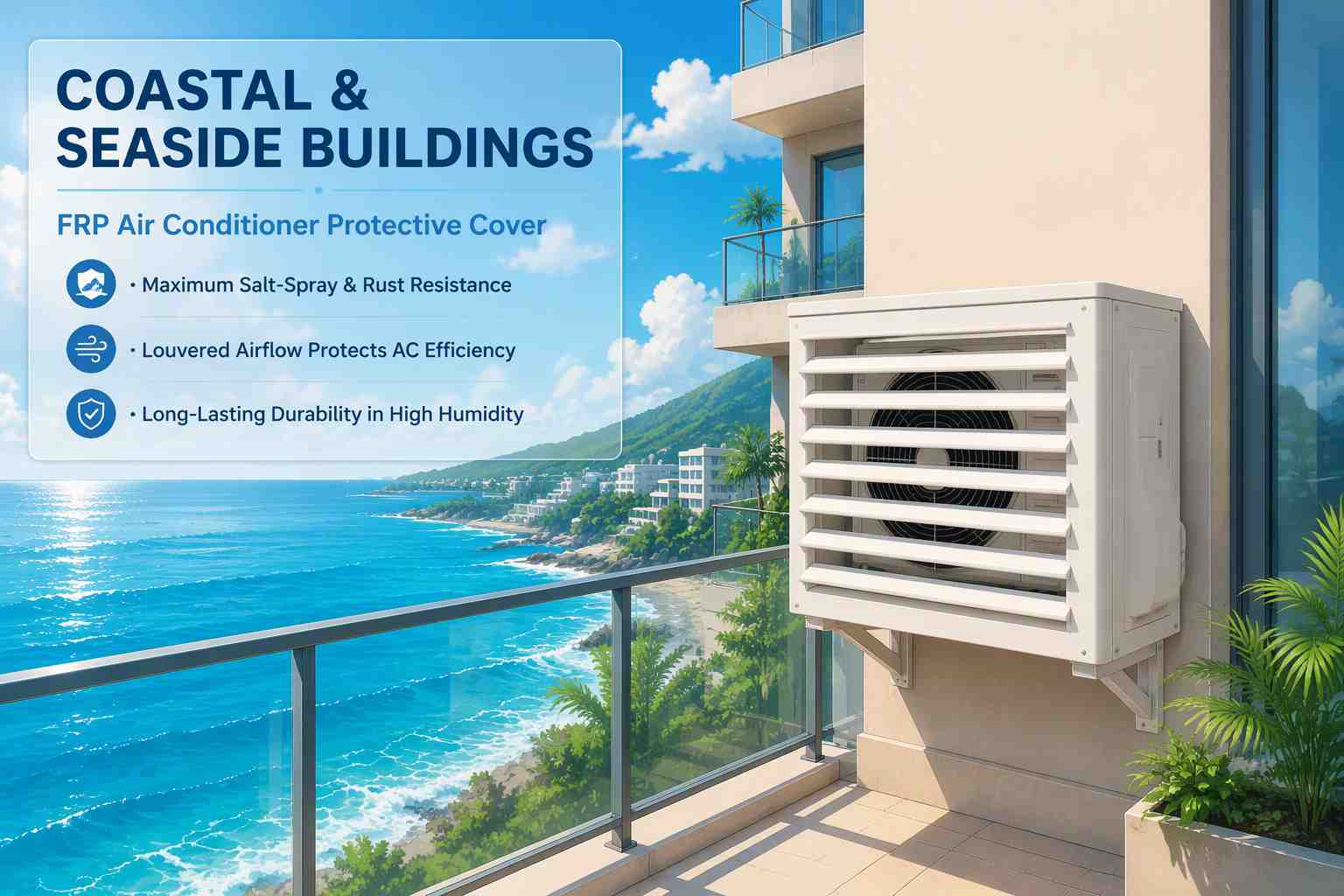
In coastal and seaside buildings, FRP air conditioner protective covers are deployed on outdoor AC units mounted on balconies, rooftops, and exterior walls where salt-laden air and high humidity are constant threats. The covers are typically installed as fixed or hinged enclosures that allow airflow while blocking direct exposure to sea spray and rain. Their corrosion-resistant fiberglass construction prevents the rust, pitting, and paint peeling that quickly destroy metal covers in these locations. The main problem solved is the accelerated deterioration of both the protective cover and the air conditioning equipment beneath it, which leads to frequent replacement and costly repairs. The practical value is a longer-lasting protection solution that preserves the AC unit's efficiency, reduces maintenance calls, and maintains the building's exterior appearance without the need for repeated repainting or replacement.
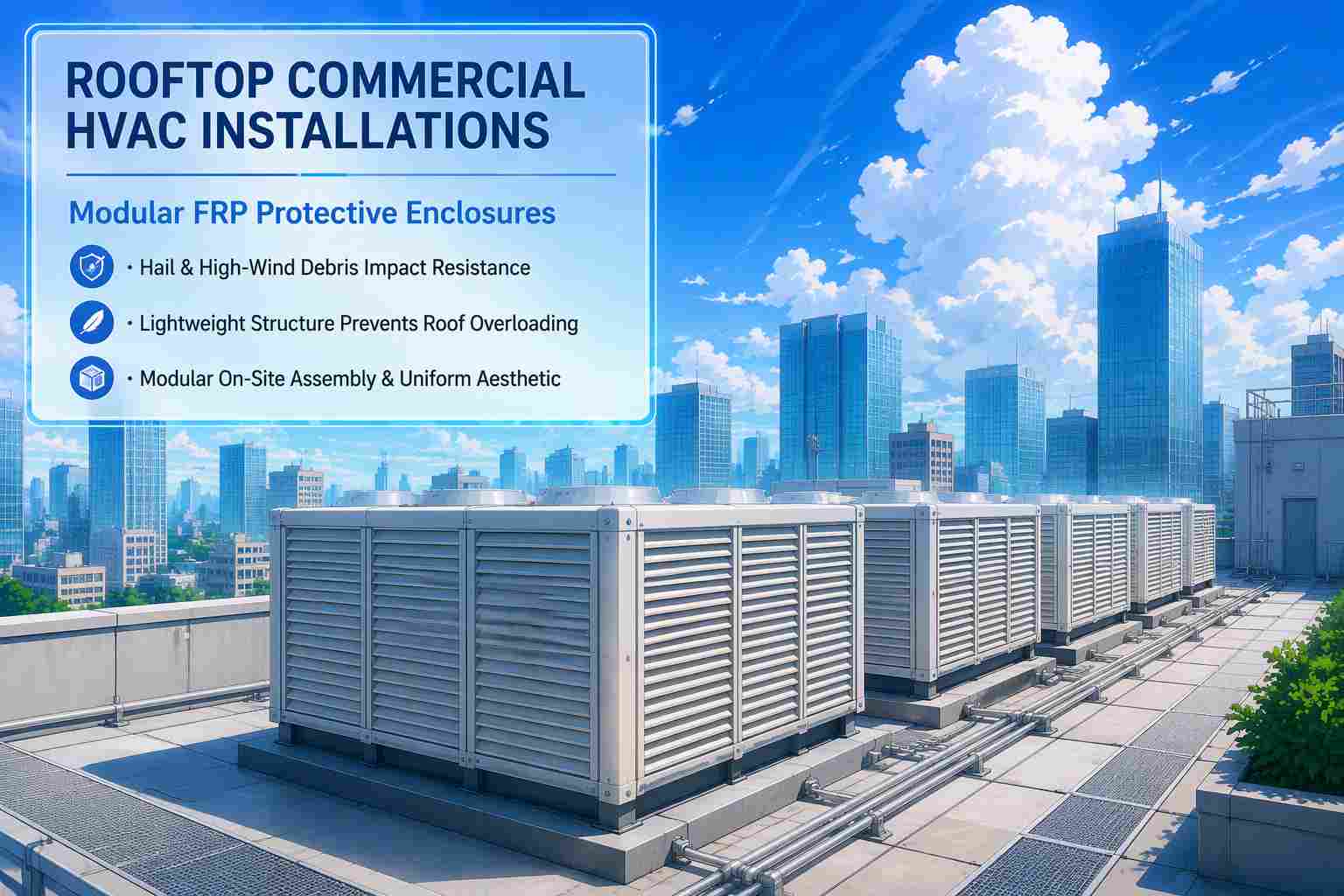
For rooftop commercial HVAC installations, FRP air conditioner protective covers are deployed on large outdoor units serving office buildings, shopping malls, hotels, and hospitals. They are typically custom-fabricated to match specific unit dimensions and may be supplied in modular sections for easy transport and assembly on site. The covers provide impact resistance against hail, wind-borne debris, and accidental damage while remaining lightweight enough to avoid overloading roof structures. The problem addressed is the vulnerability of rooftop equipment to weather extremes and physical impacts, which can cause costly system failures. The practical value is enhanced equipment protection, reduced emergency repair costs, and a professional, uniform appearance across multiple rooftop units.
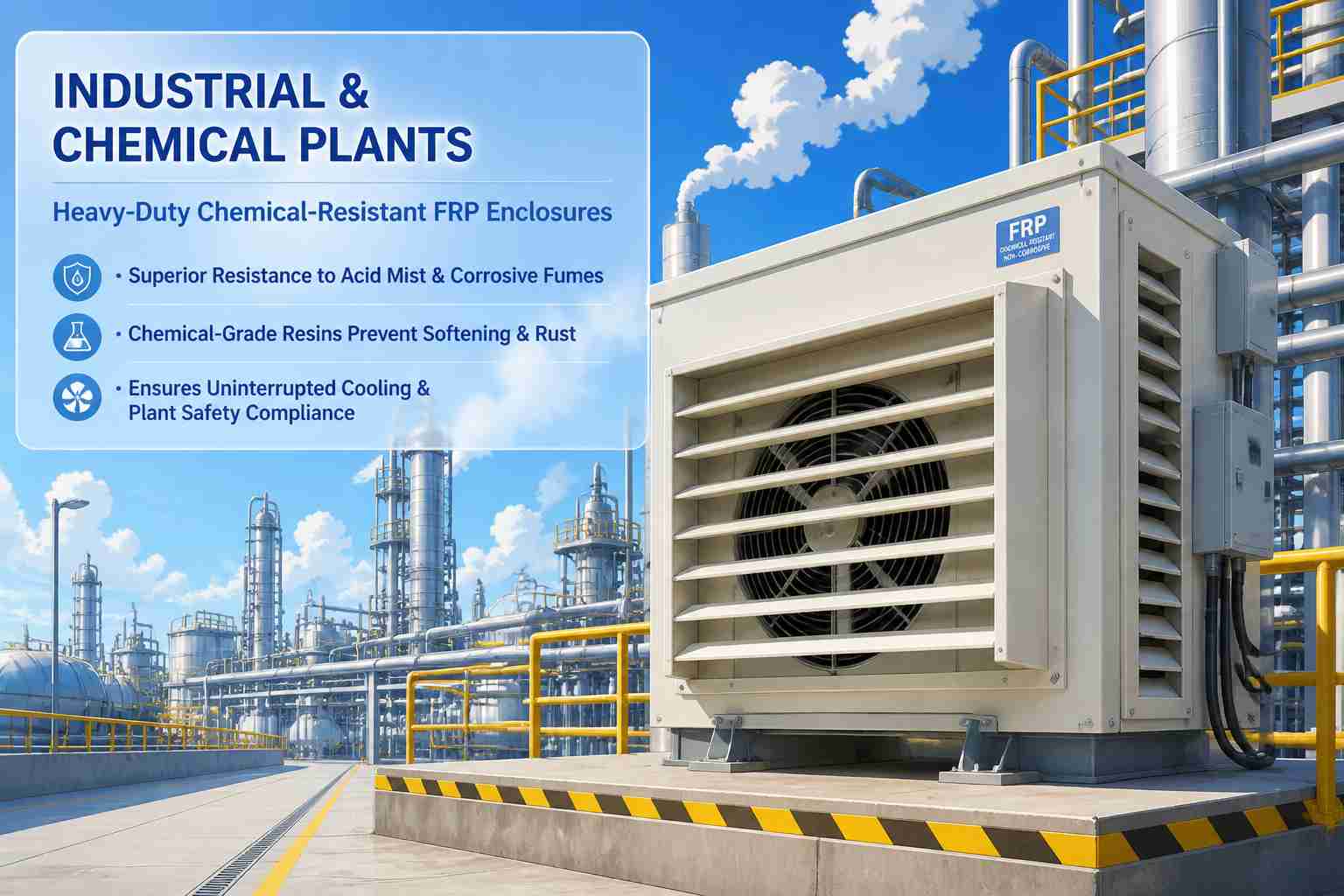
In industrial and chemical plants, FRP air conditioner protective covers are installed on outdoor cooling units that are exposed to corrosive fumes, acid mist, and chemical spills. Deployment usually involves mounting the covers directly over condenser units or placing them in wash-down areas where aggressive cleaning agents are used. The covers are fabricated with chemical-resistant resins that resist degradation from acids, alkalis, and solvents, unlike metal covers that may corrode or plastic covers that may soften or crack. The problem solved is the premature failure of AC protection caused by chemical attack, which can lead to equipment shutdowns and safety concerns. The practical value is continuous protection in hazardous environments, extended equipment service life, and compliance with plant maintenance and safety standards.
Related Products

FRP Calf Hutch Supplier & Exporter | Durable Calf Housing for Dairy & Beef Farms
Factory-direct FRP calf hutch exporter. Durable, weatherproof housing for dairy and beef calves. Custom sizes, bulk orders, fast global shipping. Get a quote today.

FRP Calf Hutch for Dairy Farm & Livestock Housing | China Factory Direct Exporter
Durable FRP calf hutch for dairy farms, calf rearing & livestock housing. Factory-direct exporter in China. Custom sizes, bulk supply, fast shipping.

FRP Telecom Protective Cover for 5G Base Stations China Factory Direct Supplier
China factory-direct exporter of FRP telecom protective covers for 5G base stations, outdoor cabinets & antenna units. Non-conductive, corrosion-proof, custom-molded. Bulk orders supported.

GFRP Sewage Tank Cover Plate | Factory-Direct Exporter for Wastewater Projects
China factory-direct exporter of GFRP sewage tank cover plates. Anti-corrosive, lightweight, high-load capacity for municipal & industrial wastewater systems. Get OEM price & fast shipment.
Contact us immediately to discuss your product project requirements
Navigation
Navigation
Contact Us
Tel.: +86 189 3266 2725
E-mail: sale@hbfortis.com
Add.: No.8-1, Zhenxing Street, Matun Town, Zaoqiang County, Hengshui City, Hebei Province
Get in Touch
Get in Touch