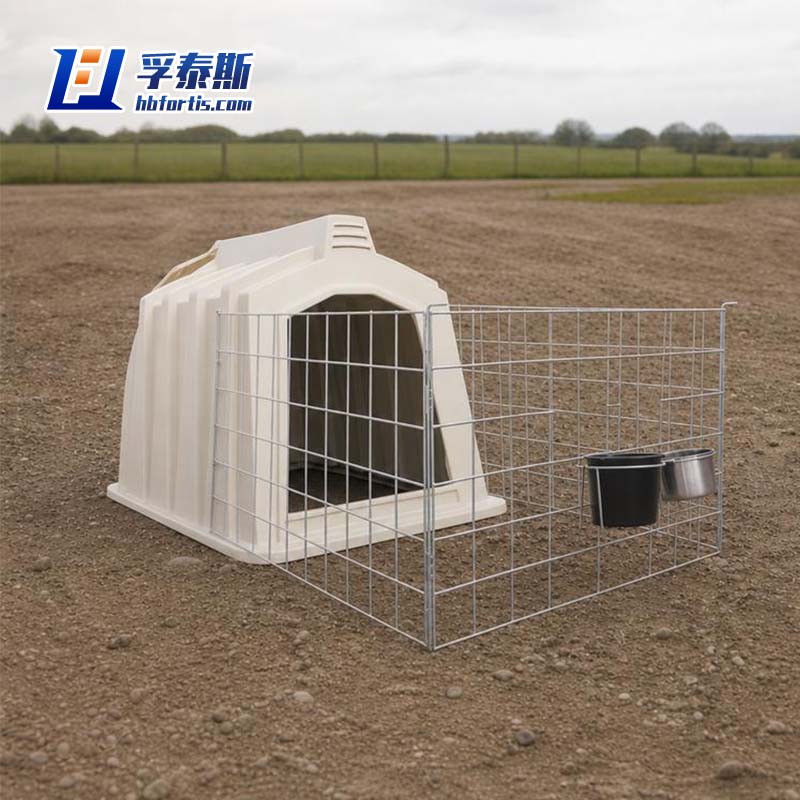
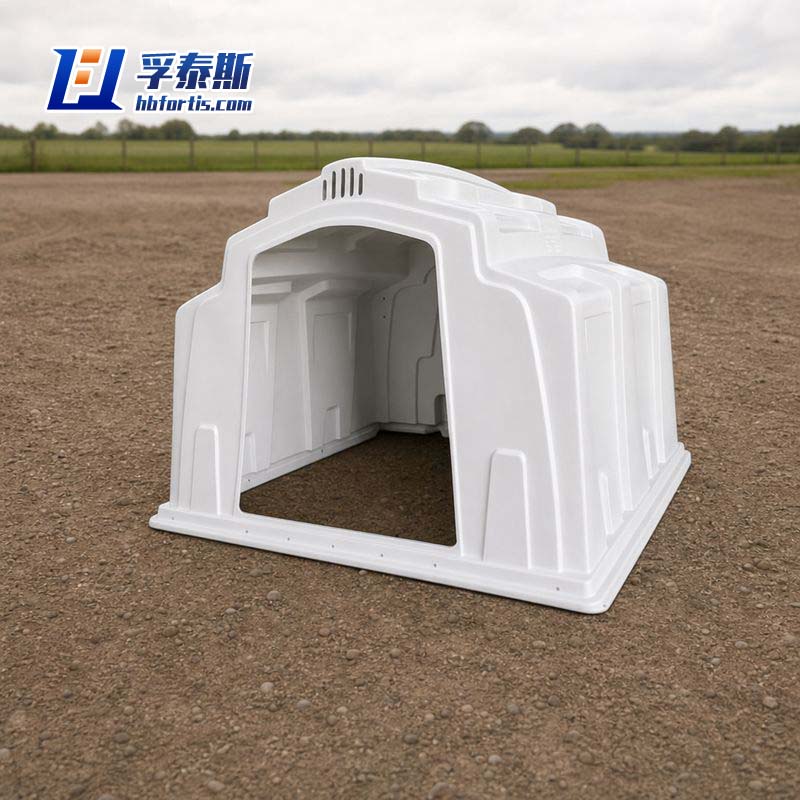
As a direct China-based manufacturer and exporter, we specialize in GFRP (Glass Fiber Reinforced Plastic) calf hutches engineered for intensive calf rearing operations. Unlike standard plastic units, our GFRP construction offers superior UV resistance and structural rigidity, ensuring a longer service life in open-environment housing. The smooth, non-porous interior surface facilitates rapid cleaning and disinfection, a critical factor in reducing cross-contamination and mortality rates among pre-weaned calves[citation:1][citation:2]. Designed with both animal welfare and labor efficiency in mind, our hutches provide a draft-free microclimate with optimal ventilation. By eliminating middlemen, we deliver export-grade calf housing solutions directly to dairy farms and distributors worldwide, combining factory pricing with reliable bulk supply.Engineered for the modern dairy operation, our GFRP Calf Hutch is the definitive housing solution for pre-weaned calves from birth to weaning. The use of glass fiber reinforced plastic delivers a distinct advantage over traditional materials: it is impact-resistant, virtually maintenance-free, and retains its structural integrity under harsh outdoor conditions. The hutch features a generous internal footprint allowing calves to stand and turn comfortably, while the optional galvanized steel fence provides a secure outdoor exercise area. We supply this product strictly as a factory-direct exporter, meaning our clients receive verified build quality without the markup of trading companies. Whether you are equipping a new calf facility or replacing aging wooden pens, this GFRP hutch is designed to lower veterinary costs by promoting a drier, cleaner, and more hygienic living environment for your future herd.

Hebei Fortis Technology Co., Ltd Product Brochure
Product Advantages
FRP composite material has low thermal conductivity, providing natural insulation against both extreme heat and cold. In summer, the hutch interior stays cooler than metal or thin plastic alternatives, reducing heat stress and respiratory stress in young calves. In winter, the insulation helps retain body heat, lowering the risk of cold-related illness and mortality. This stable microclimate supports healthier growth rates and reduces veterinary costs. For dairy farms in diverse climate zones—from hot Middle Eastern summers to cold Northern European winters—FRP hutches offer reliable year-round performance without additional insulation modifications.
Premium FRP composite formulations incorporate UV stabilizers and gel-coat surface layers that resist yellowing, chalking, and fiberbloom caused by prolonged sun exposure. The hutch retains its structural strength and appearance after years of outdoor use, unlike ordinary plastics that become brittle and crack. Rain, snow, and wind exposure do not compromise the material's integrity. This weather resistance ensures the product meets the quality expectations of importers in sun-intensive regions such as Australia, the Middle East, and Latin America, where inferior materials fail prematurely and generate warranty claims.
FRP composites can be formulated with fire-retardant additives that meet international safety standards, achieving self-extinguishing properties and low smoke emission. This makes the hutch safer for use in barns and enclosed facilities where fire risk is a concern. For exporters targeting markets with stringent building and agricultural equipment regulations—such as the EU, North America, and Australia—fire-retardant FRP hutches help buyers meet insurance and safety compliance requirements, adding a differentiated value proposition against cheap, non-compliant alternatives.
Application Scenarios
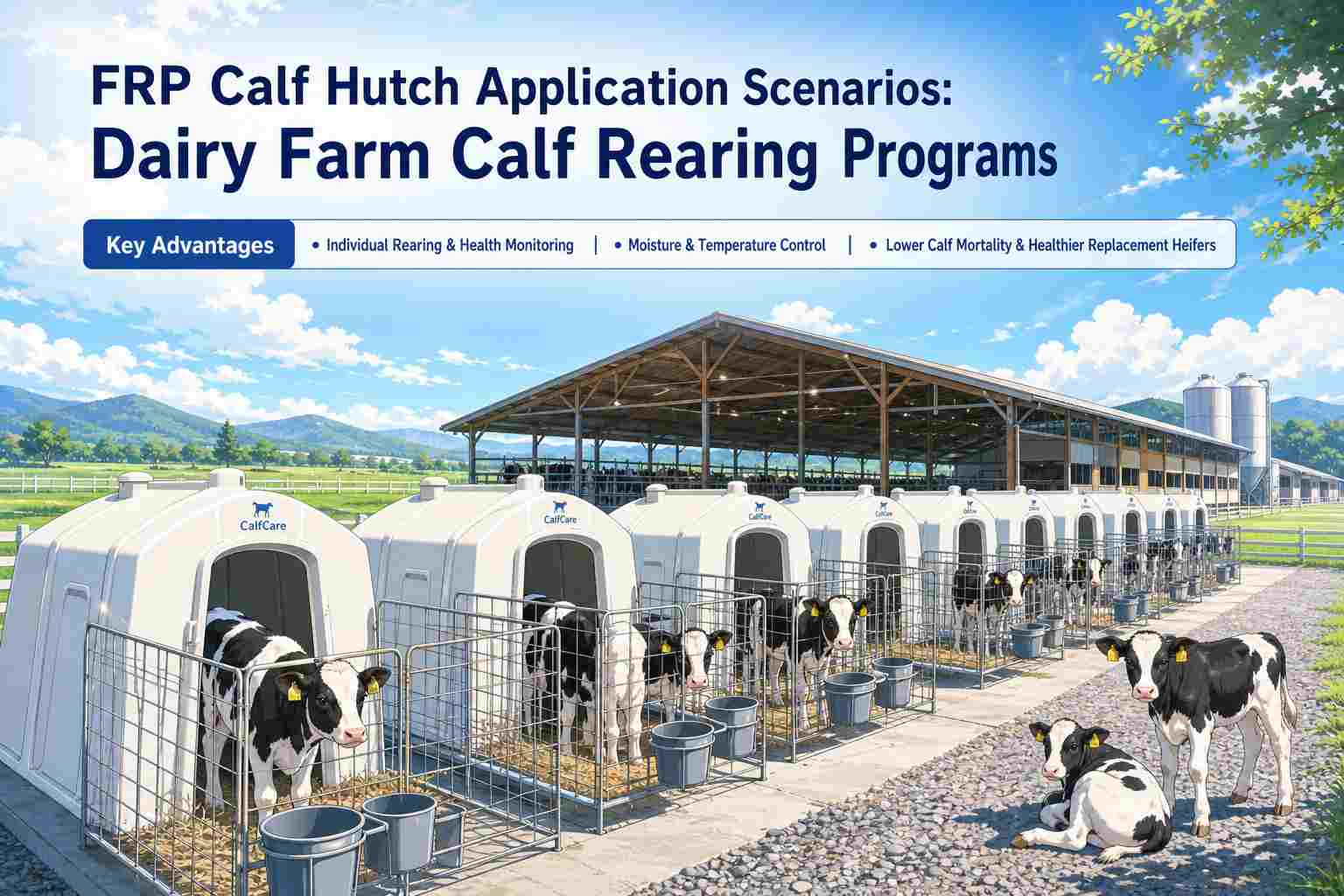
On commercial dairy farms, FRP calf hutches are typically deployed in rows or clusters outdoors, often on a gravel or concrete pad near the main barn. Each hutch houses a single calf during the pre-weaning period, allowing workers to feed, monitor, and treat calves individually. The smooth fiberglass surface and insulated walls help control moisture and temperature, which directly addresses the common problems of respiratory disease and scours in group housing. The practical value is clear: lower calf mortality, reduced veterinary costs, and healthier replacement heifers entering the milking herd.
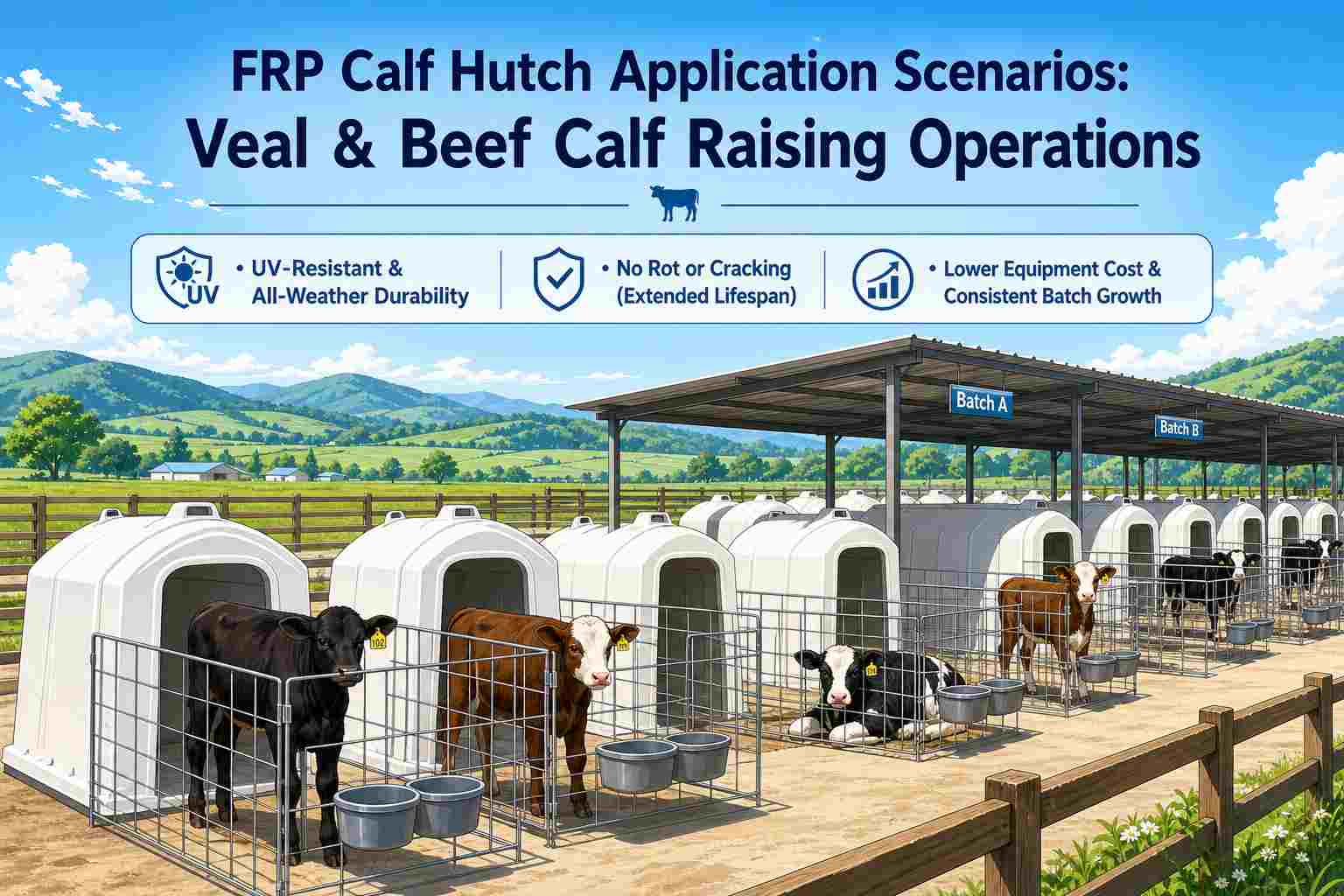
In veal and beef calf operations, FRP calf hutches are used to raise calves in controlled individual units before they are moved to group pens or finishing systems. The hutches are often placed in open lots or under simple shade structures, where their UV-resistant fiberglass body withstands continuous sun and rain exposure. This solves the issue of wooden hutches rotting within a few seasons and plastic hutches becoming brittle and cracking. The result is a longer replacement cycle, lower annual equipment costs, and more consistent calf performance across batches.
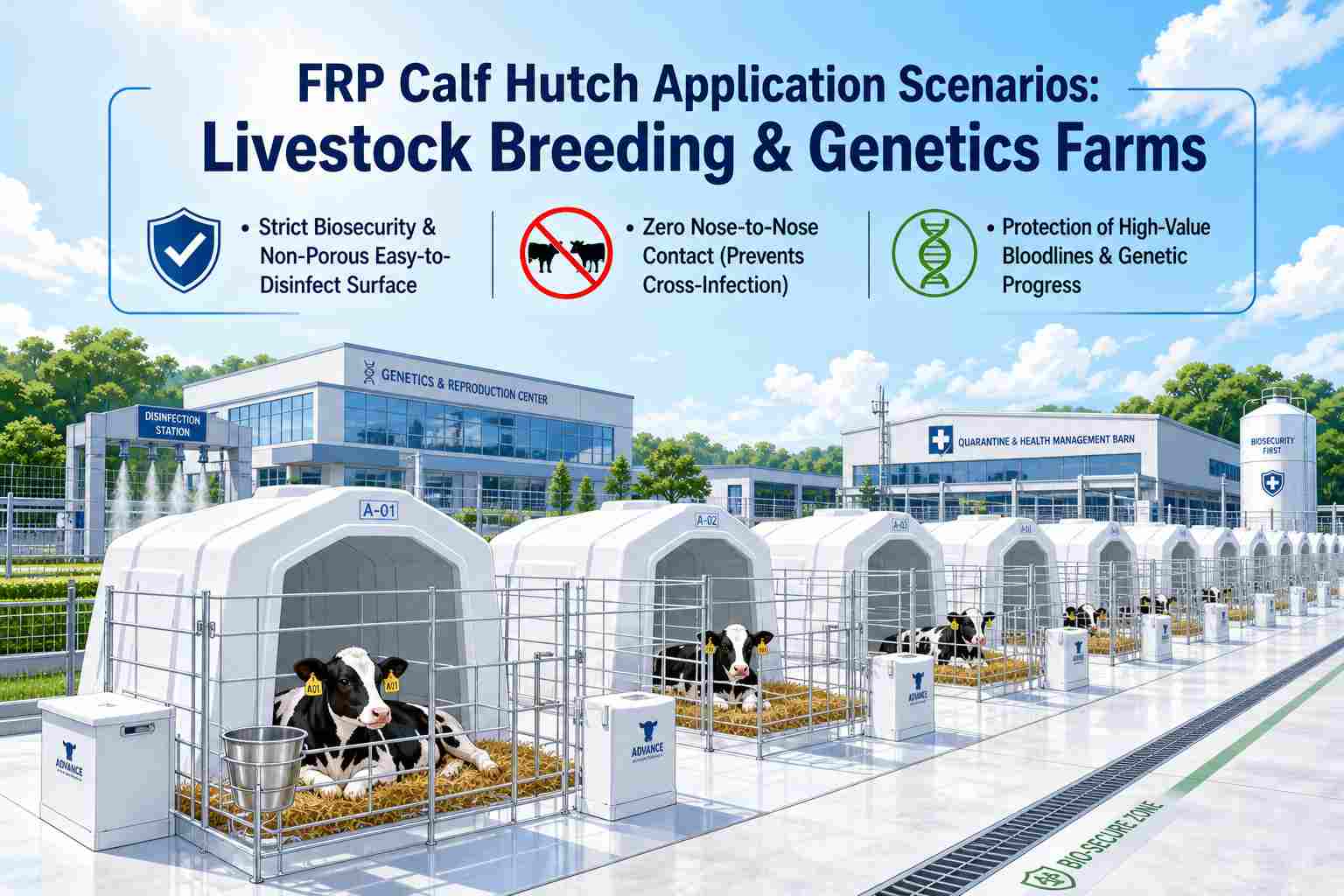
Breeding farms and genetics companies use FRP calf hutches to isolate valuable newborn calves from the general herd. These calves often carry high genetic value and require strict biosecurity. The non-porous, easy-to-disinfect surface supports rigorous hygiene protocols, while the individual housing design prevents nose-to-nose contact between calves. This reduces the risk of disease transmission during the most vulnerable first weeks of life. The actual value is protection of high-value bloodlines, better survival rates, and more reliable genetic progress for the breeding program.
Related Products

FRP Composite material Calf Hutch for Dairy Farm Factory Direct Exporter
China factory-direct composite calf hutch exporter. Durable, UV-resistant PP material for dairy farms. Easy-clean, movable pens to reduce calf stress. Get a quote today.

FRP Calf Hutch Supplier & Exporter | Durable Calf Housing for Dairy & Beef Farms
Factory-direct FRP calf hutch exporter. Durable, weatherproof housing for dairy and beef calves. Custom sizes, bulk orders, fast global shipping. Get a quote today.

FRP Calf Hutch for Dairy Farm & Livestock Housing | China Factory Direct Exporter
Durable FRP calf hutch for dairy farms, calf rearing & livestock housing. Factory-direct exporter in China. Custom sizes, bulk supply, fast shipping.

FRP Telecom Protective Cover for 5G Base Stations China Factory Direct Supplier
China factory-direct exporter of FRP telecom protective covers for 5G base stations, outdoor cabinets & antenna units. Non-conductive, corrosion-proof, custom-molded. Bulk orders supported.
Contact us immediately to discuss your product project requirements
Navigation
Navigation
Contact Us
Tel.: +86 189 3266 2725
E-mail: sale@hbfortis.com
Add.: No.8-1, Zhenxing Street, Matun Town, Zaoqiang County, Hengshui City, Hebei Province
Get in Touch
Get in Touch