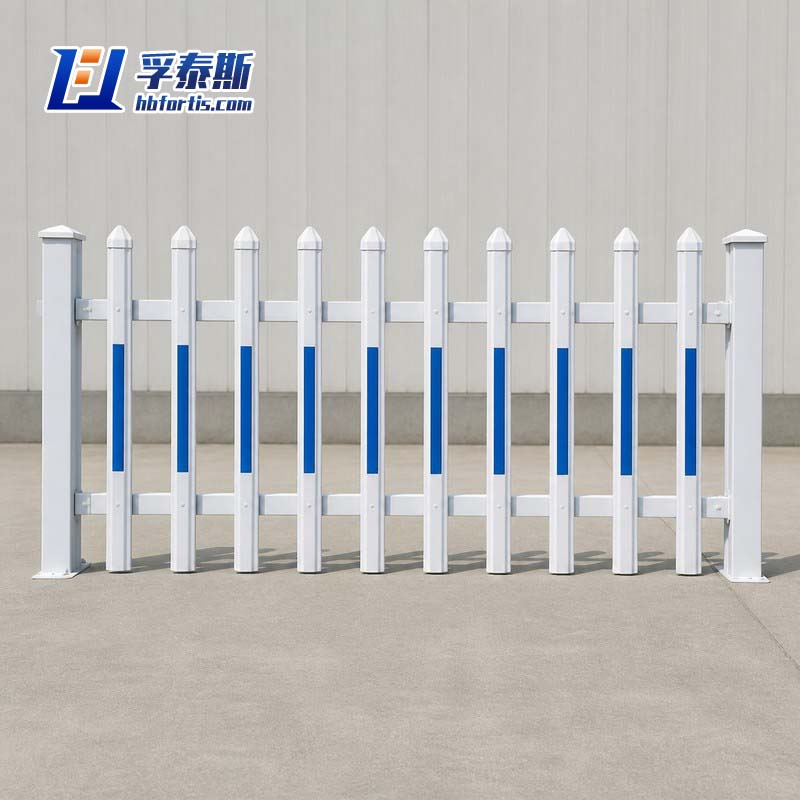
We are a China-based factory and exporter producing FRP fence systems for solar farms, coastal resorts, and highway perimeters. Our fiberglass fences are pultruded with UV-stable resins, delivering rust-free performance, electrical insulation, and long-term color retention in salt-laden or high-sunlight environments. As a direct supplier, we manage tooling, production, and export packing in-house, giving overseas buyers stable quality and predictable lead times. Custom heights, colors, and post spacings are available for project-specific requirements.Looking for a dependable FRP fence supplier in China? We manufacture and export fiberglass fencing for solar farms, coastal resorts, and highway boundaries. Our FRP fence resists rust, UV fading, and salt corrosion, making it a smart alternative to steel or wood. Factory-direct pricing, custom specifications, and export-ready packaging are all handled by our team. Send your drawings or site conditions for a fast quotation.

Hebei Fortis Technology Co., Ltd Product Brochure
Product Advantages
Rust-Free and Corrosion-Proof Performance
FRP fence is manufactured from fiberglass reinforced plastic, a material that does not contain iron and therefore cannot rust. It resists salt spray, acid rain, and industrial chemicals that would quickly break down galvanized or painted steel fencing. This makes it a dependable choice for coastal resorts, solar farms, and highway perimeters where moisture and pollution are constant threats.
UV Stability and Color Retention
With UV-stabilized resin systems, FRP fence holds its color and surface finish after years of direct sun exposure. It will not chalk, fade, or become brittle the way some plastics do, and it avoids the peeling and repainting cycles common with coated metal fences. Project owners in high-sunlight regions get a fence that looks consistent from installation through its full service life.
Non-Conductive and Safe Around Electrical Assets
FRP fence is electrically non-conductive, which makes it a natural fit for solar farms, substations, and battery storage sites. It eliminates the shock and grounding risks associated with metal fencing, protecting both personnel and sensitive equipment. This insulating property is often a deciding factor when utilities and energy developers write their specifications.
Lightweight Yet Structurally Strong
Despite weighing significantly less than steel, FRP fence offers high tensile and flexural strength thanks to its pultruded construction. The reduced weight lowers shipping costs, simplifies manual handling, and allows faster installation with fewer workers and lighter tools. It also places less load on posts, footings, and existing boundary structures.
Application Scenarios
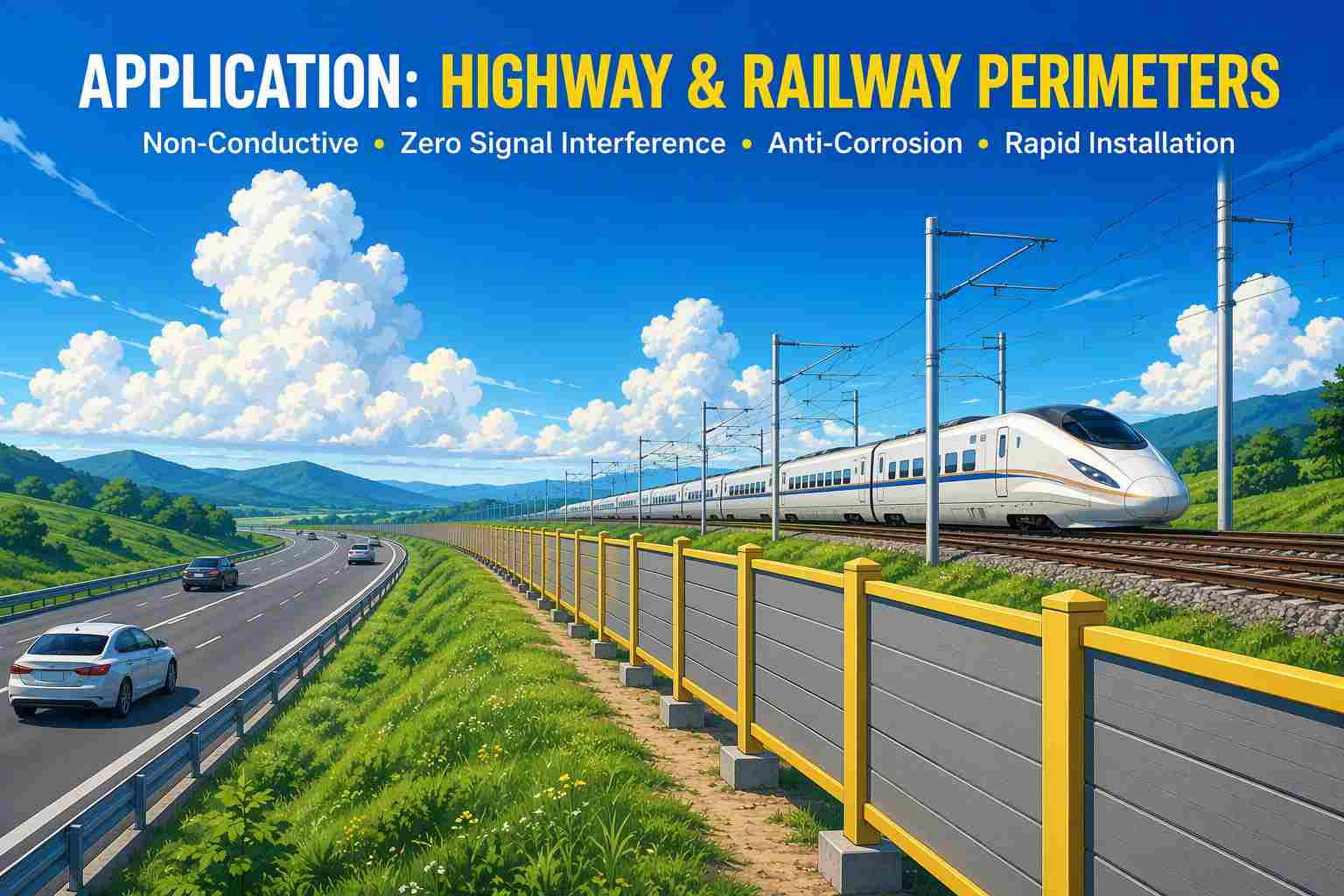
FRP fence is used along highway and railway perimeters as a durable, low-maintenance barrier that can be installed in long continuous runs. The panels are lightweight, non-conductive, and resistant to vehicle exhaust, road salt, and vibration, and they can be assembled with standard hand tools without welding or hot work. It solves the problem of steel fencing corroding from de-icing salts and requiring lane closures for repainting or replacement, and it avoids the signal interference that metal fencing can cause near railway traction power and signaling systems. The real value for transport authorities is faster installation during short possession windows, fewer maintenance callouts, and a perimeter that maintains structural integrity in high-wind and freeze-thaw conditions.
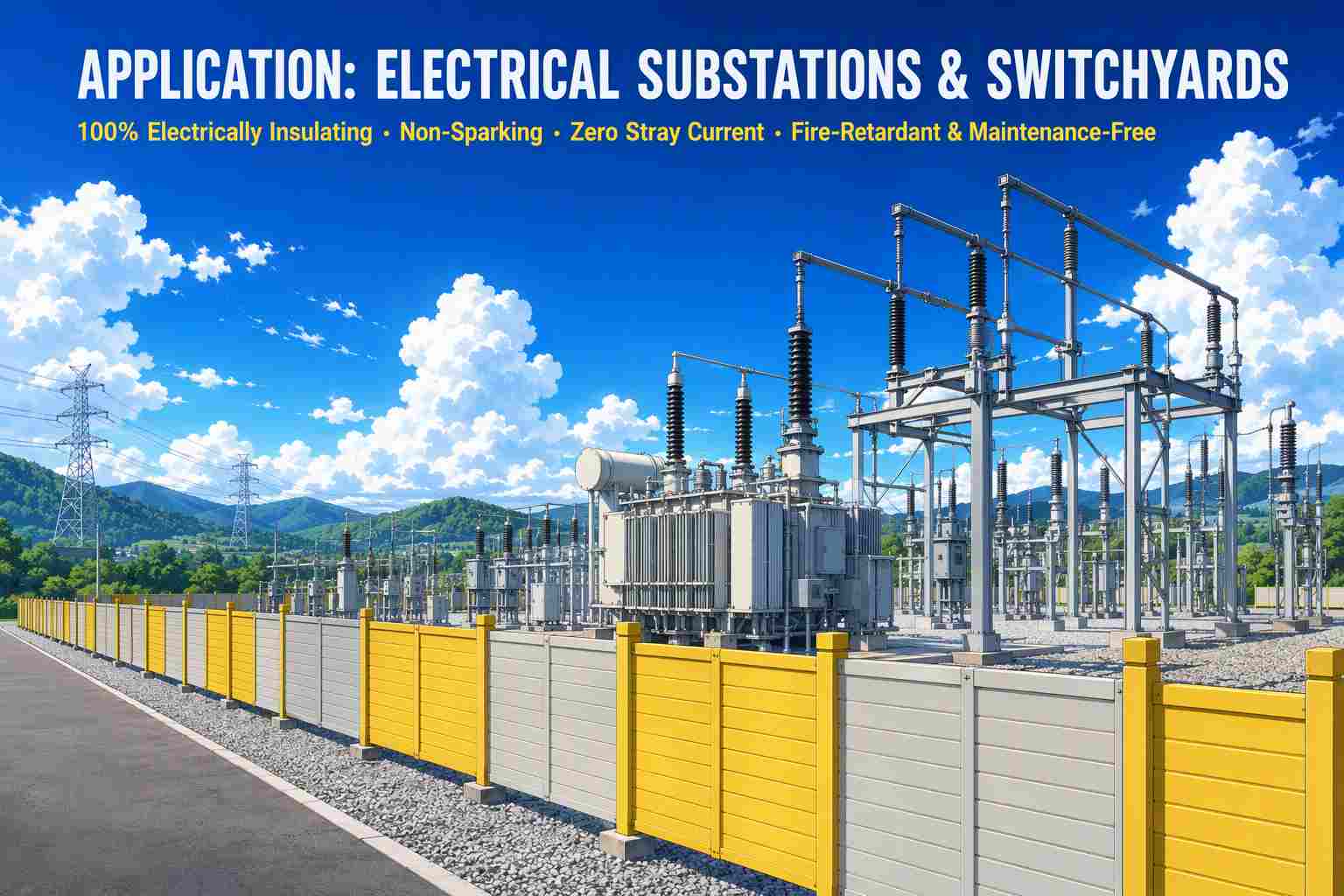
FRP fence is deployed around electrical substations, switchyards, and battery storage sites as a safety perimeter that is electrically insulating and non-sparking. The fence is made from non-conductive fiberglass profiles, often with fire-retardant resin, and is installed on independent posts to avoid creating a grounding path. It solves the serious problem of metal fencing conducting stray current, creating shock risk for personnel, and interfering with protective relaying and grounding design. The practical value is compliance with utility safety specifications, reduced risk during live-line maintenance, and a fence that does not require periodic rust treatment, which lowers long-term maintenance costs and avoids hot-work permits inside energized facilities.
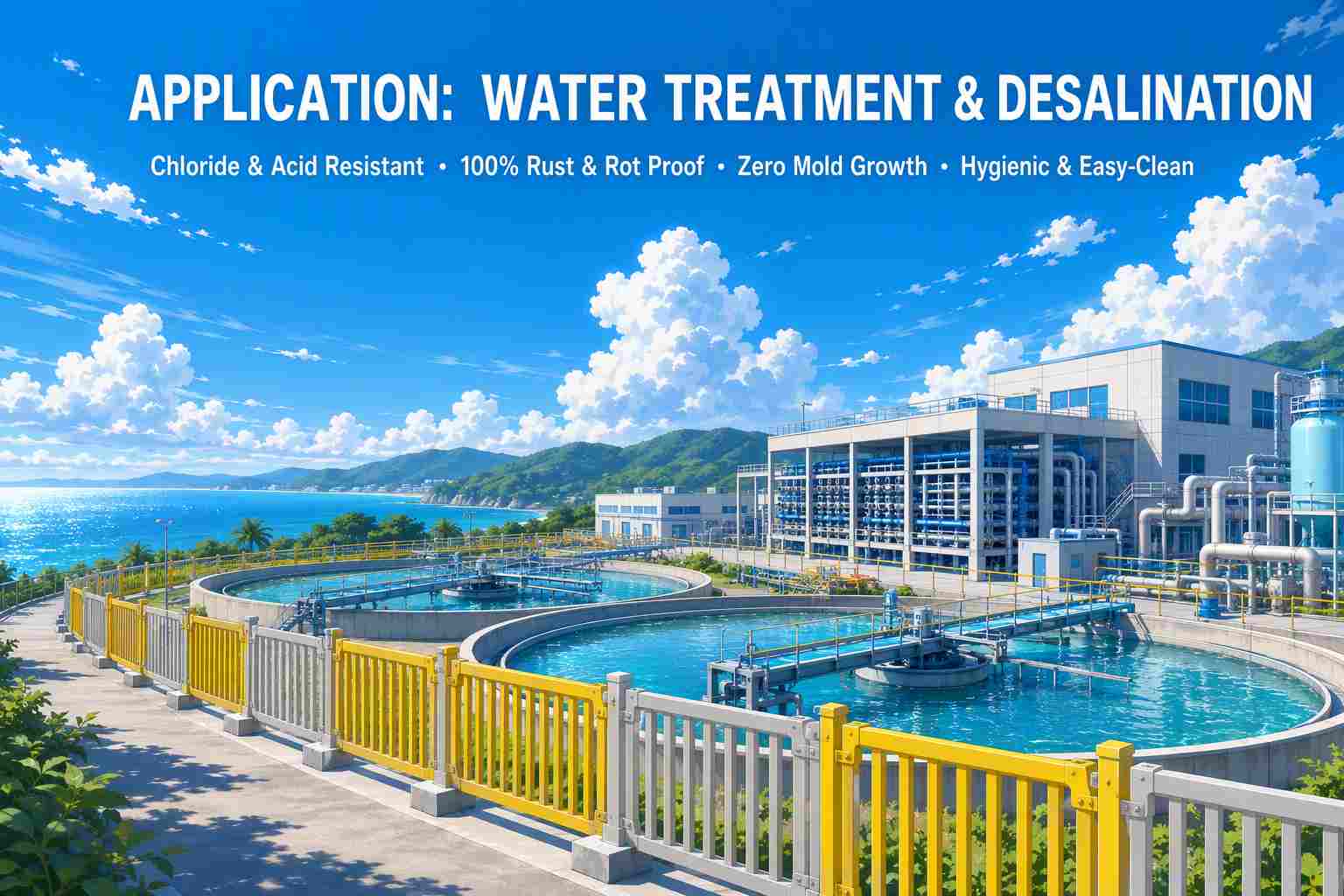
FRP fence is installed around water treatment and desalination plants, including clarifier areas, chemical storage zones, and membrane buildings. The fence resists chlorides, acids, and constant moisture, and it will not corrode, rot, or support mold growth like wood or coated steel. It solves the problem of conventional fencing failing rapidly in aggressive chemical and humid environments, which creates security gaps and repeated replacement costs. The real value for plant operators is a perimeter that maintains security and appearance in harsh conditions, reduces shutdown time for fence repairs, and supports hygiene and safety audits because it is easy to clean and does not harbor bacteria or rust particles.
Parameter Specifications
|
|
||
|
Model |
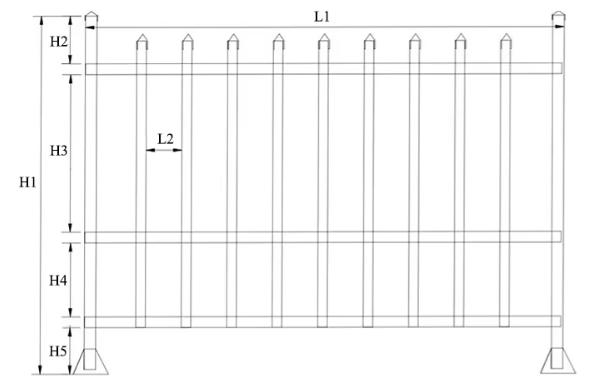
Dimension(mm)H1×H2×H3×H4×H5 |
Dimension(mm)L1×L2 |
|
FT-F |
Customized |
Customized |
Related Products

Fiberglass GRP FRP Fence for Warehouse Perimeters Factory-Direct Manufacturer
Factory-direct FRP fence exporter serving coastal, chemical and solar sites. Corrosion-proof, non-conductive, UV-stable. Custom specs, bulk pricing, fast quotes.

Fiberglass GRP FRP Fence for Industrial Parks from China Direct Factory Supplier
China factory-direct FRP fence exporter. Corrosion-proof for coastal farms, chemical plants & solar sites. Bulk supply, fast shipping. Get a quote today.

Fiberglass GFRP FRP Fence for Chemical Plants Coastal Warehouses to made in China
Heavy-duty FRP fence panels resist salt spray, acids, and UV rays. Ideal for perimeter security in wastewater treatment, marinas, and power substations. 25-year service life. Get layout-based quote.

Fiberglass GFRP FRP Extensible Guardrail Isolation Plants for Road Construction Work Zones FT-8
Heavy-duty FRP extensible guardrail for construction sites, highways & industrial zones. Rust-proof, lightweight & portable. 1-5m adjustable length. Anti-UV, non-conductive. Factory direct price. Request quote now!
Contact us immediately to discuss your product project requirements
Navigation
Navigation
Contact Us
Tel.: +86 189 3266 2725
E-mail: sale@hbfortis.com
Add.: No.8-1, Zhenxing Street, Matun Town, Zaoqiang County, Hengshui City, Hebei Province
Get in Touch
Get in Touch