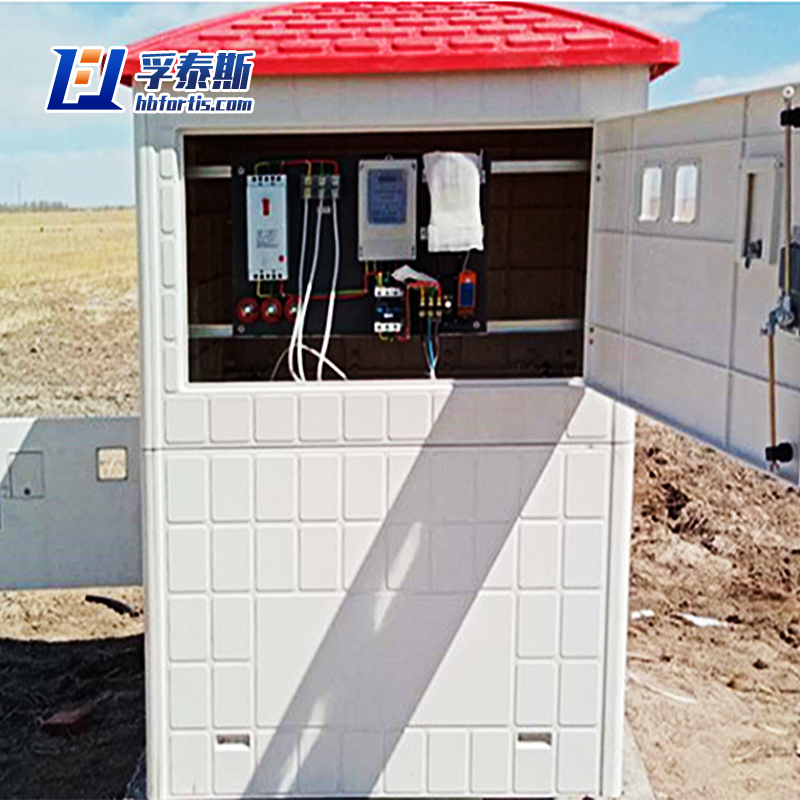
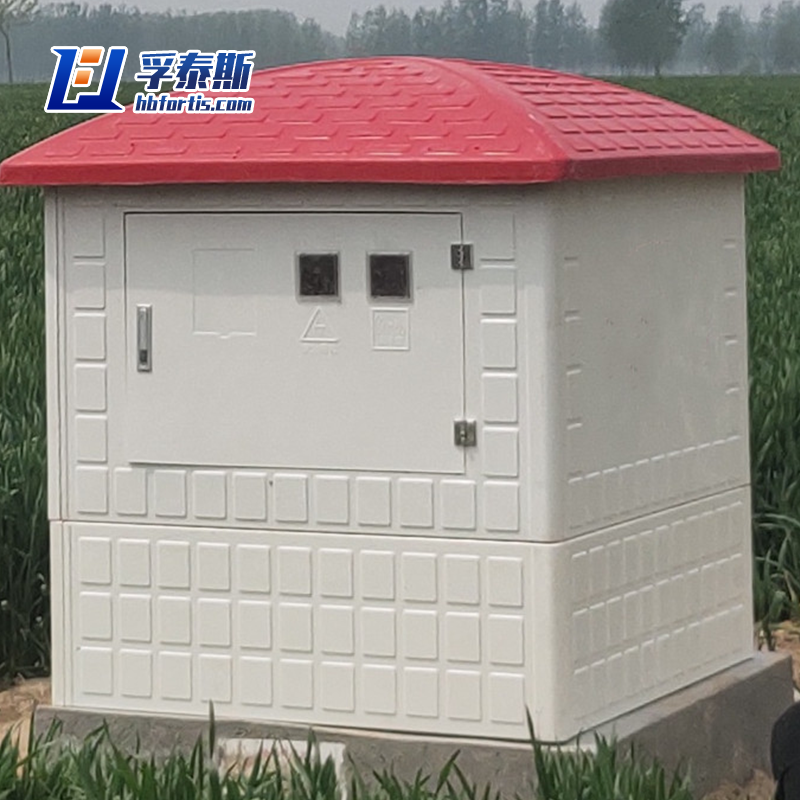
An FRP Electric Well House is a specialized protective enclosure manufactured from Fiberglass Reinforced Plastic (FRP) , designed to house and safeguard well pump electrical equipment, control panels, pressure switches, junction boxes, and associated plumbing components. Unlike traditional wooden or metal well houses, FRP offers superior electrical insulation (non-conductive), making it the safest choice for enclosures containing live electrical components exposed to moisture-rich well environments. Our FRP electric well houses are compression-molded or hand lay-up constructed using high-quality SMC (Sheet Molding Compound) or BMC (Bulk Molding Compound) processes, ensuring uniform wall thickness, high mechanical strength, and dimensional stability across production batches.
Each FRP well house features a double-wall insulated construction (optional foam core filling), seamless one-piece design to eliminate water ingress points, and UV-stabilized gel coat finish to prevent yellowing or chalking from sunlight exposure. The material itself is fire-retardant (meeting UL 94 V-0 or equivalent standards), chemical-resistant to oils, acids, alkalis, and salts, and maintains structural integrity across temperatures from -40°C to +120°C. Standard configurations include a removable or hinged roof panel for full overhead access to well pumps during maintenance or replacement, lockable stainless steel door hardware, built-in ventilation louvers to prevent condensation, and mounting rails or back plates for securing electrical panels and components. Available in multiple sizes from small single-pump enclosures (24" x 24" x 36") to large walk-in units (8' x 8' x 8') suitable for multiple pressure tanks and control cabinets. Unlike metal enclosures that corrode and wood that rots, FRP electric well houses deliver 20+ years of maintenance-free service in even the harshest outdoor or underground environments.

Hebei Fortis Technology Co., Ltd Product Brochure
Product Advantages
Non-Conductive Electrical Safety: FRP material provides inherent dielectric strength exceeding 10 kV/mm, completely eliminating shock hazards when housing 110V/220V/480V pump control panels or VFD drives, especially critical in wet well environments where ground faults pose serious risks to personnel. No need for separate grounding mats or isolation transformers.
Superior Corrosion Resistance: Unlike galvanized steel that rusts within 3-5 years or aluminum that pitted in salt air, FRP withstands exposure to chlorinated water, hydrogen sulfide gas (common in wells), road salts, alkaline soils, and industrial chemical atmospheres without degradation. Ideal for wastewater treatment plants, agricultural wells with fertilizer runoff, or coastal installations.
Lightweight & Easy Installation: At approximately one-fifth the weight of steel and half the weight of concrete, our FRP electric well houses can be placed by two workers onto a simple gravel bed or concrete pad without requiring crane equipment. This reduces shipping costs (container loading of 200+ units) and allows installation in remote, vehicle-inaccessible well sites where heavy equipment cannot reach.
Thermal Insulation Performance: Double-wall construction with 20mm-40mm polyurethane foam core achieves R-value of 8-12, significantly outperforming single-wall metal or wood enclosures. This prevents freezing of pressure tanks and controls in winter and reduces internal heat buildup from electrical equipment during summer, extending component lifespan.
UV-Stabilized & Weatherproof: UV-resistant gel coat (tested to ASTM G154 2000-hour accelerated weathering) prevents surface degradation, chalking, or fiber blooming. Seamless molded corners and integrated drip edges ensure zero water infiltration even during hurricane-force rain and wind conditions (tested to 150 mph wind load).
Vandal & Theft Resistant: High impact strength (Charpy impact > 20 kJ/m²) resists hammer or rock damage. Recessed stainless steel padlock hasps and optional internal mounting for control panels prevent unauthorized access to valuable pump controllers, pressure switches, and copper wiring.
Application Scenarios
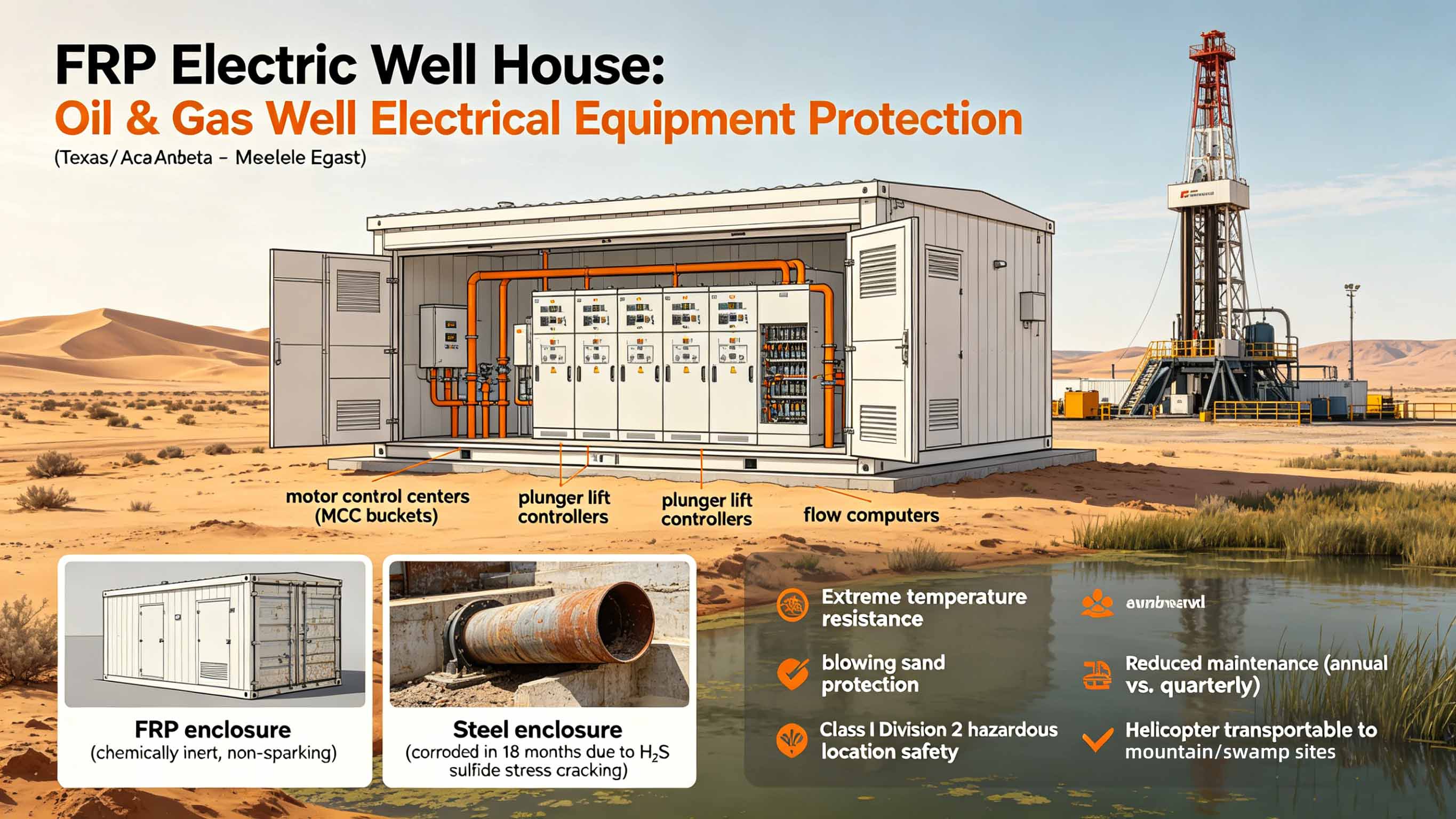
Remote oil and gas well sites in Texas, Alberta, or the Middle East expose electrical equipment to extreme temperatures, blowing sand, flammable gas atmospheres, and corrosive hydrogen sulfide (H₂S). An FRP electric well house with explosion-rated modifications houses motor control centers (MCC buckets), plunger lift controllers, and flow computers that manage extraction rates. Unlike steel enclosures that corrode through within 18 months of H₂S exposure (sulfide stress cracking), FRP remains chemically inert and does not spark upon impact—a critical safety feature in Class I Division 2 hazardous locations where flammable gases may be present. Our non-sparking, corrosion-proof FRP well houses also reduce maintenance frequency from quarterly inspections to annual checks, dramatically lowering operating costs for production companies managing hundreds of remote well pads. The lightweight design allows helicopter transport to inaccessible mountain or swamp drilling locations where road construction would be cost-prohibitive.
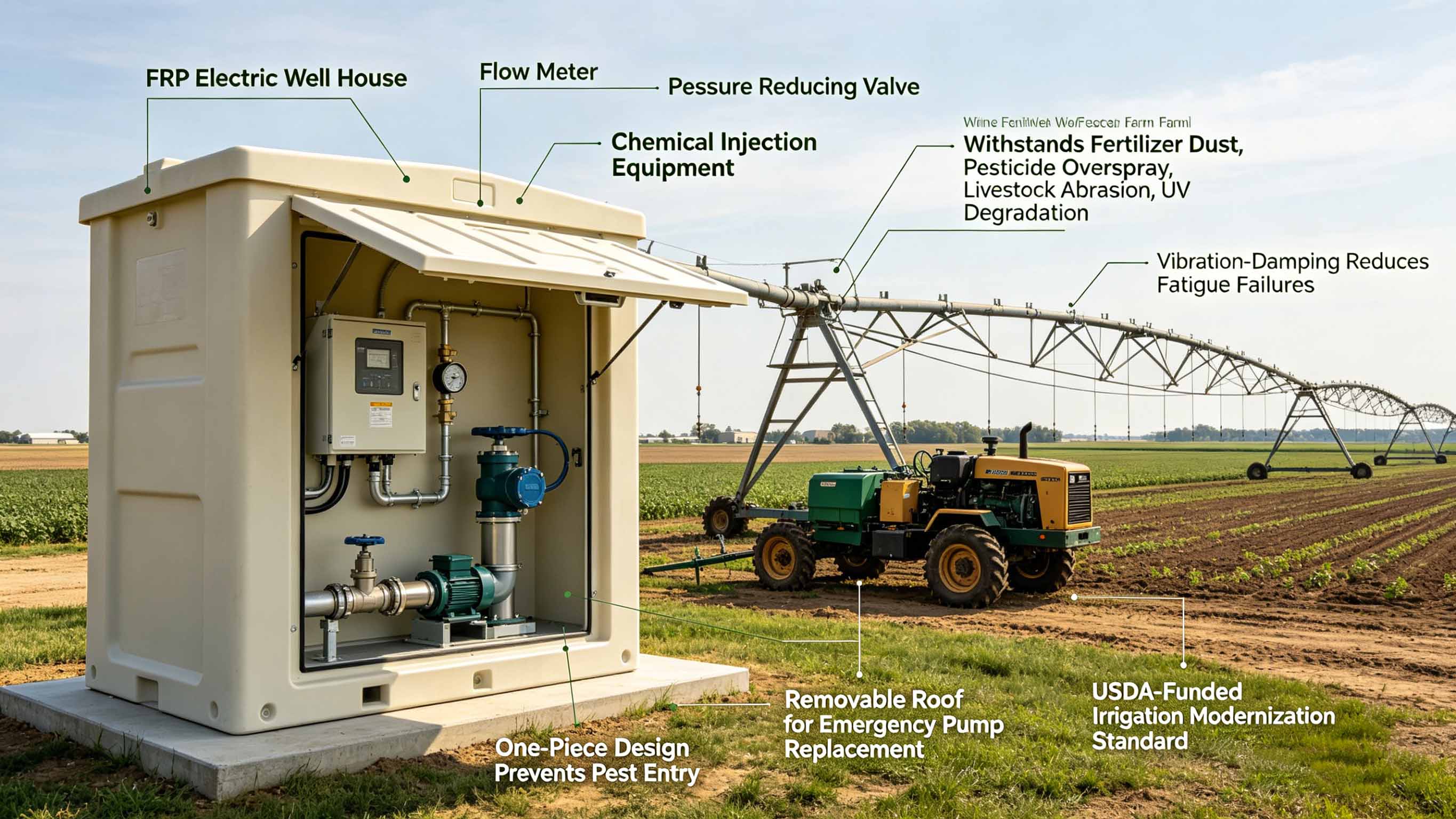
Large-scale farms operating center pivot irrigation systems require reliable well houses protecting the pump start panel, flow meter, pressure reducing valve, and chemical injection equipment at each wellhead. An FRP electric well house withstands years of exposure to fertilizer dust, pesticide overspray, livestock abrasion, and UV degradation without requiring repainting or rust repair (unlike steel enclosures that need annual sandblasting and coating). When pivots operate automatically overnight, the housed equipment must survive vibrations from nearby diesel irrigation engines without loosening connections—FRP's vibration-damping characteristics reduce fatigue failures common in metal enclosures. Farmers particularly value the one-piece molded design without seams or joints where field mice and snakes could enter to nest on warm control panels, causing short circuits and fire hazards. With removable roofs facilitating pump replacement during planting season emergencies (when downtime means lost crop yield), our FRP well houses have become standard specification for USDA-funded irrigation modernization projects.
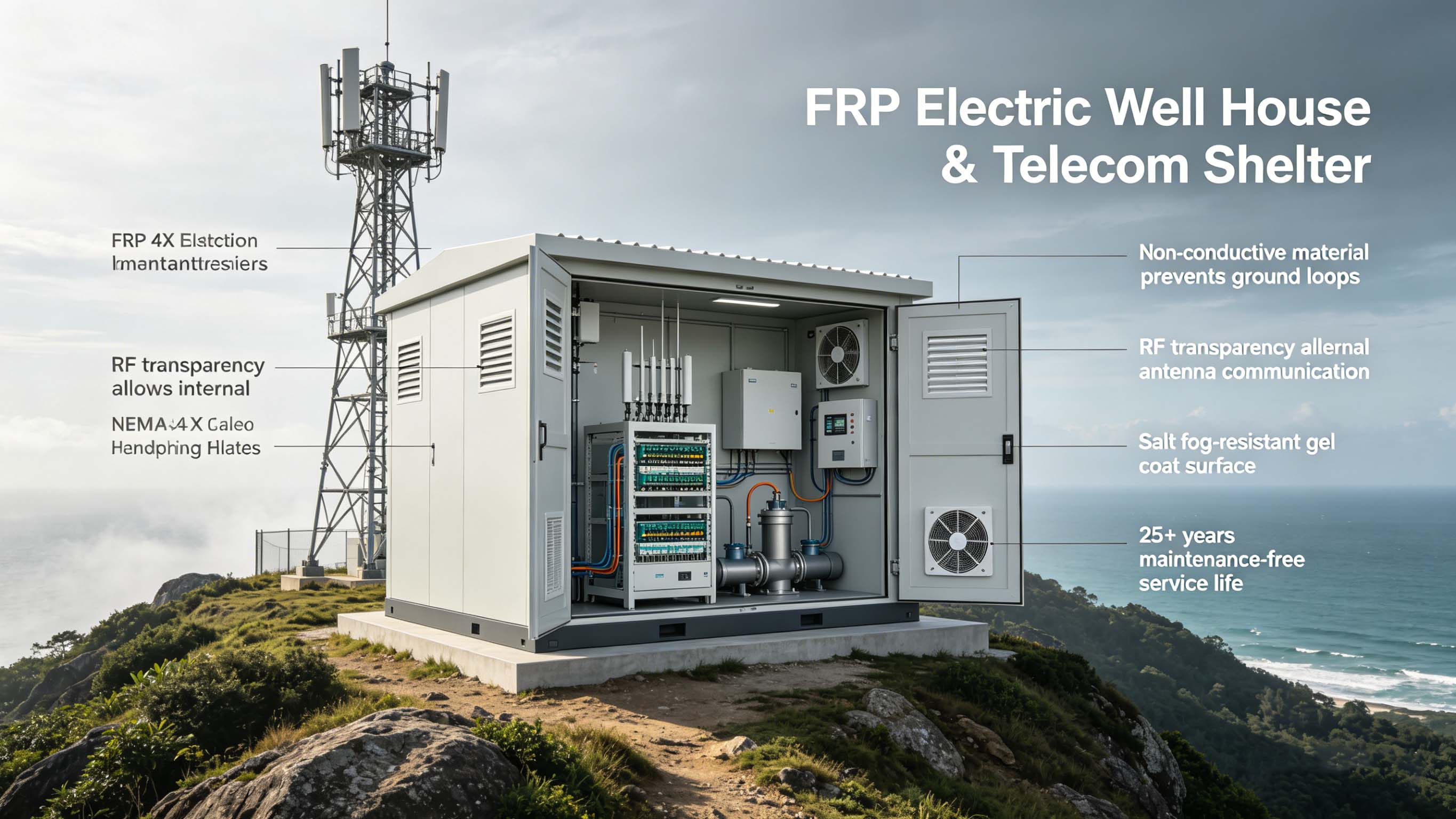
Telecommunication towers located on remote hilltops require equipment shelters housing base station transceivers, backup batteries, rectifiers, and fiber optic termination panels—often sharing space with well pumps for tower site water supply. An FRP electric well house serves dual duty as both pump enclosure and telecom shelter, with the non-conductive material preventing ground loops that plague metal shelters (where stray currents from poorly grounded tower lightning protection can damage sensitive electronics). The material's RF transparency (no signal attenuation or reflection) allows internal antennas to communicate with tower-mounted equipment without requiring external feedthroughs that compromise weather sealing. In coastal tower sites (e.g., Florida or Southeast Asia), salt fog that destroys aluminum shelters within 5 years barely affects FRP gel coat surfaces. With options for factory-installed mounting racks, ventilation fans with hydrophobic louvers, and NEMA 4X-rated gland plates for cable entry, our FRP electric well houses provide the maintenance-free service life of 25+ years expected for telecom infrastructure assets, avoiding the scramble for emergency shelter replacement during hurricane season.
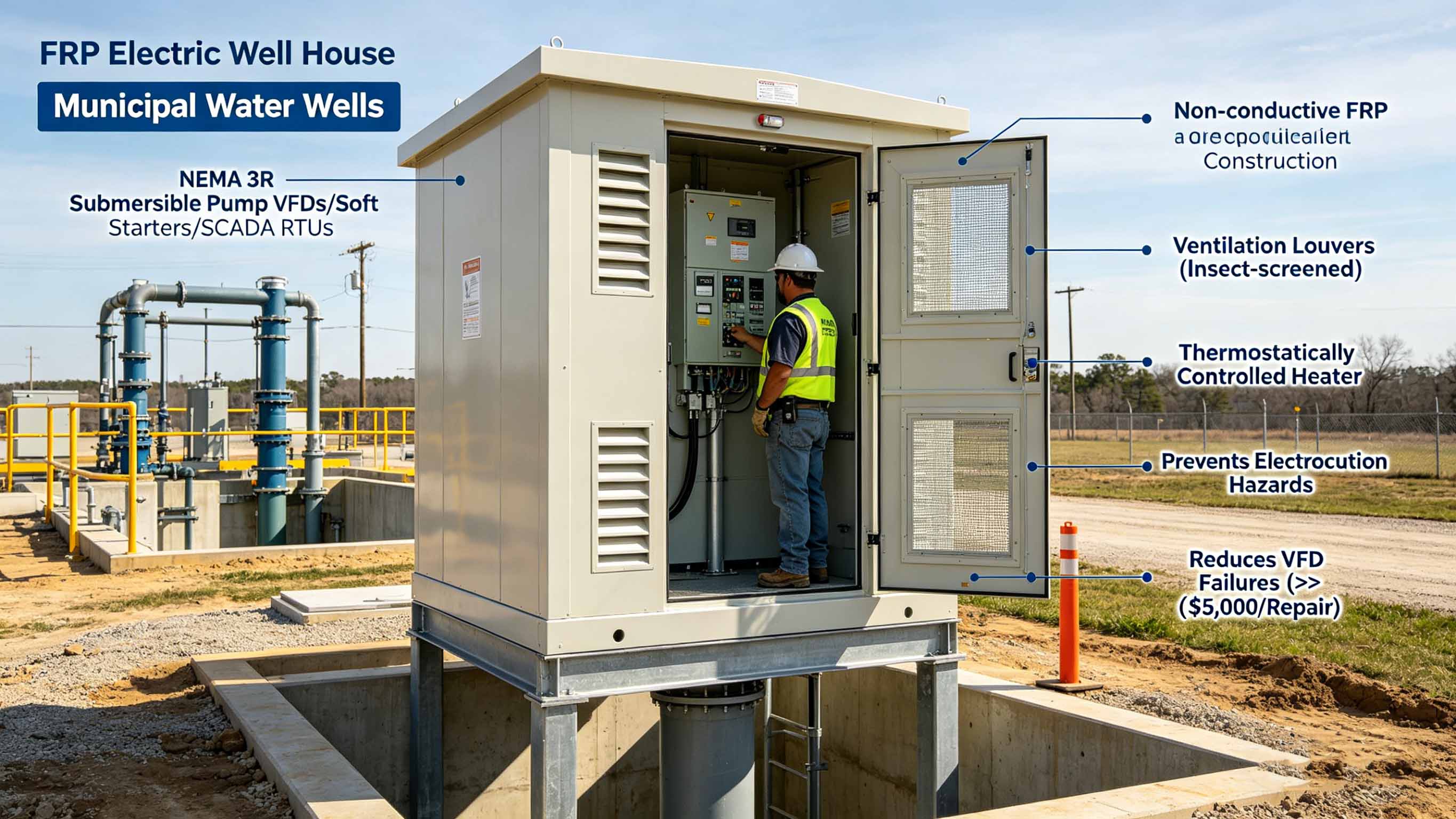
Municipal water departments operate hundreds of deep well sites supplying drinking water to communities, each requiring reliable protection for submersible pump variable frequency drives (VFDs), soft starters, and SCADA remote telemetry units (RTUs). An FRP electric well house installed directly over the well casing provides a NEMA 3R-equivalent enclosure that shields these sensitive electrical controls from rain, snow, dust, and animal intrusion while allowing maintenance personnel to stand inside (walk-in models) to service panels. The non-conductive FRP construction is particularly critical when wellheads become submerged during spring thaws—metal enclosures could energize standing water, creating deadly electrocution hazards. With built-in ventilation louvers (screened against insects) and optional thermostatically controlled heaters, our enclosures maintain proper operating temperatures for sensitive electronics year-round, reducing costly VFD failures that can exceed $5,000 per repair and leave communities without water for days.
Related Products

FRP Molded Cover Exporter for Chemical Plants, Water Treatment Factory-Direct Supply
Factory-direct FRP molded covers for chemical, water treatment, marine and industrial applications. Custom sizes, corrosion-resistant, bulk export supply. Get a quote.

FRP Molded Cover Exporter Custom Fiberglass Covers for Chemical, Marine & Construction Applications
As a direct FRP molded cover exporter, we supply custom fiberglass covers for chemical plants, marine decks, and construction sites. Factory-direct pricing, OEM sizes, fast export delivery.

FRP Molded Cover Exporter for Substations | Custom GRP Cable Trench Covers
Factory-direct FRP molded cover exporter for substations. GRP cable trench covers, equipment enclosures & transformer pads—corrosion-resistant, custom sizes, bulk OEM export.

FRP Molded Cover Exporter for Power Plants, Substations | Factory Direct Supply
FRP molded cover exporter & factory-direct supplier for power plants, substations, chemical & water treatment projects. Custom sizes, corrosion-resistant, bulk export.
Contact us immediately to discuss your product project requirements
Navigation
Navigation
Contact Us
Tel.: +86 189 3266 2725
E-mail: sale@hbfortis.com
Add.: No.8-1, Zhenxing Street, Matun Town, Zaoqiang County, Hengshui City, Hebei Province
Get in Touch
Get in Touch