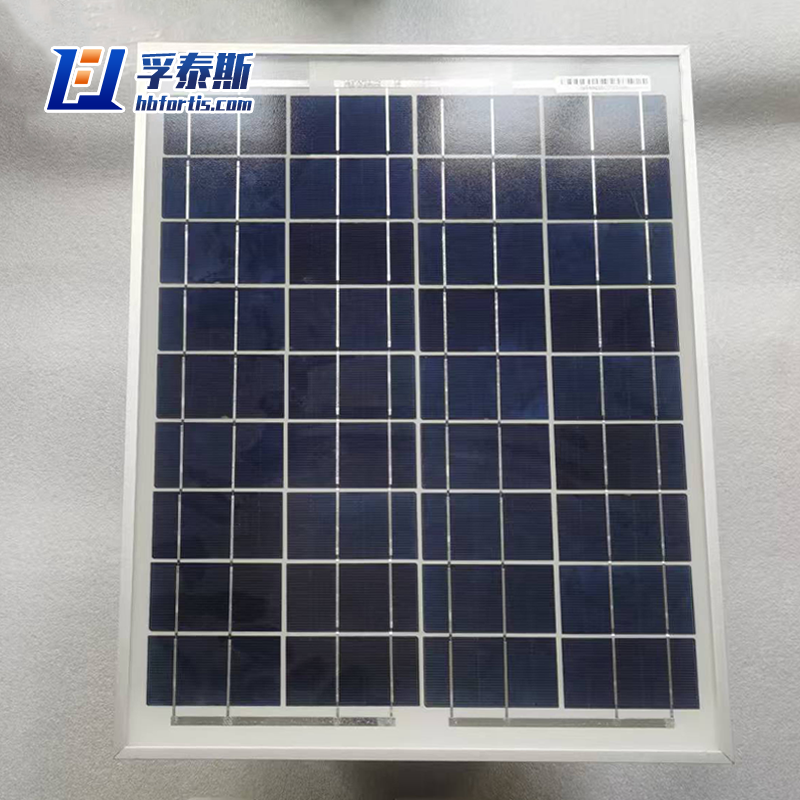
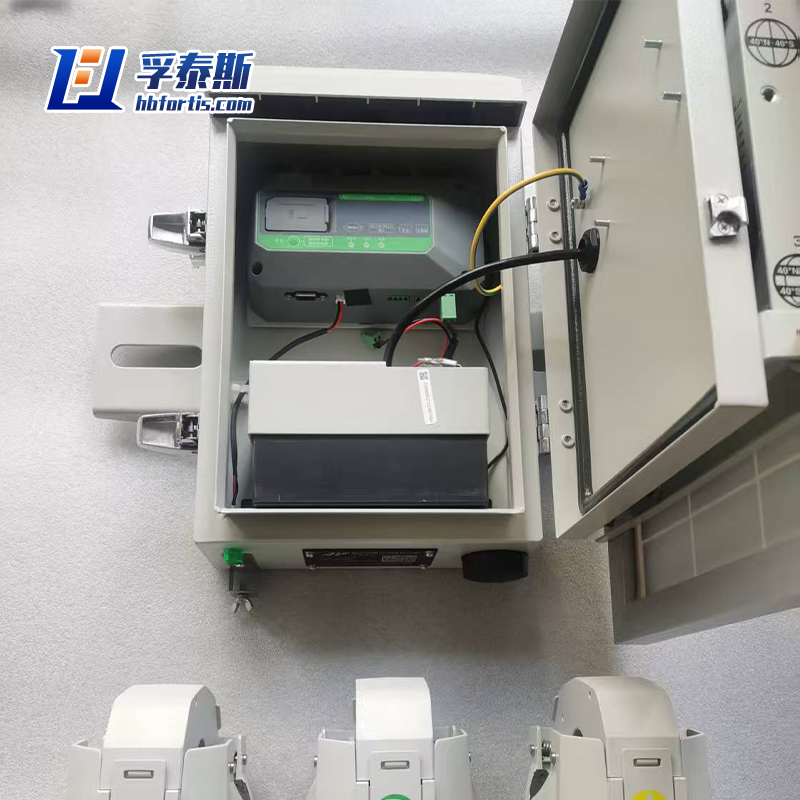
A Fault Indicator is an intelligent monitoring device designed to detect and indicate short circuit and earth fault currents in power distribution networks. Installed directly on overhead lines, cable joints, or switchgear panels, this device provides a visual or remote alarm (LED flash, display, or SCADA signal) once a fault passes its detection point. By pinpointing the exact fault section, linemen no longer need to patrol entire feeder lines manually. Our fault passers feature automatic reset after a preset time or line re-energization, drastically reducing outage duration and improving system reliability. Available in panel-mounted, socket, and clip-on types for both 6kV to 35kV overhead and underground cable applications.

Hebei Fortis Technology Co., Ltd Product Brochure
Product Advantages
Dual Fault Detection: Simultaneously captures short circuit (overcurrent threshold) and earth fault (zero sequence current or capacitive current), covering over 95% of distribution network failure types.
Instant Visual Alert: High-brightness LED flash or mechanical flag (red/yellow) rotates to the window, visible even at night or from a distance, reducing fault location time from hours to minutes.
Automatic & Manual Reset: Programmable auto-reset after 2/4/8 hours or upon line re-energization; optional magnetic reset tool for manual clearing after maintenance.
Self-Powered & Maintenance-Free: Harvests energy directly from the fault current or line load current via built-in CT; no batteries or external power supply needed, with a lifespan of over 10 years.
Remote Communication Option: Available with 433MHz RF or GPRS/4G module to send fault data to your SCADA or mobile app, enabling smart grid automation.
Application Scenarios
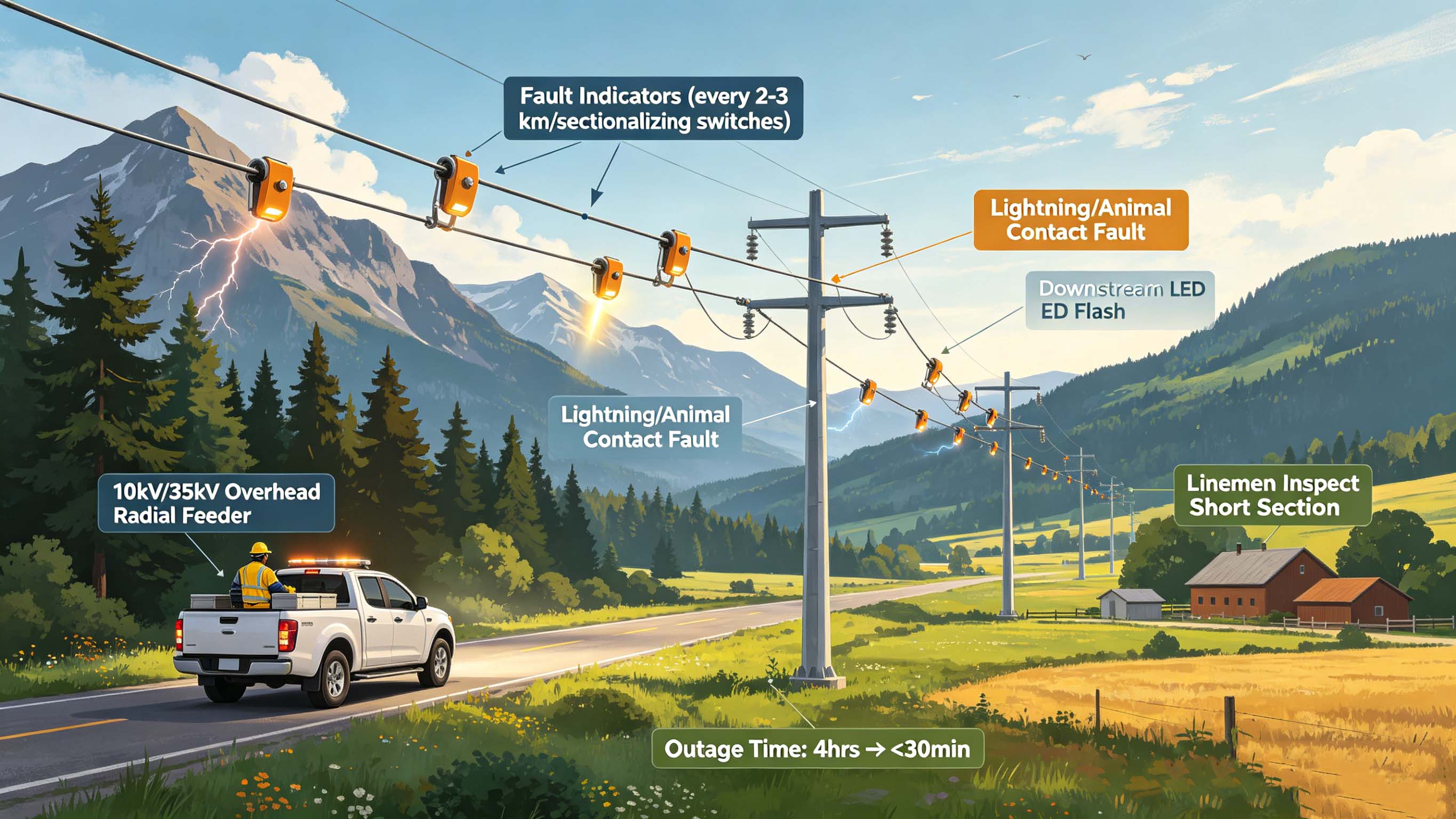
On long-distance 10kV or 35kV overhead radial feeders passing through mountains, forests, or rural areas, a lightning strike or animal contact may cause a transient or permanent fault. When a fault indicator is clipped onto each phase conductor at key branch points (e.g., every 2-3 km or at sectionalizing switches), the device displays a bright LED flash only on the downstream side of the fault. Linemen drive to the first flashing indicator and inspect only the short section ahead, rather than patrolling 20 km of line. This directly cuts outage time from 4 hours to under 30 minutes, dramatically improving SAIDI and CAIDI utility metrics.
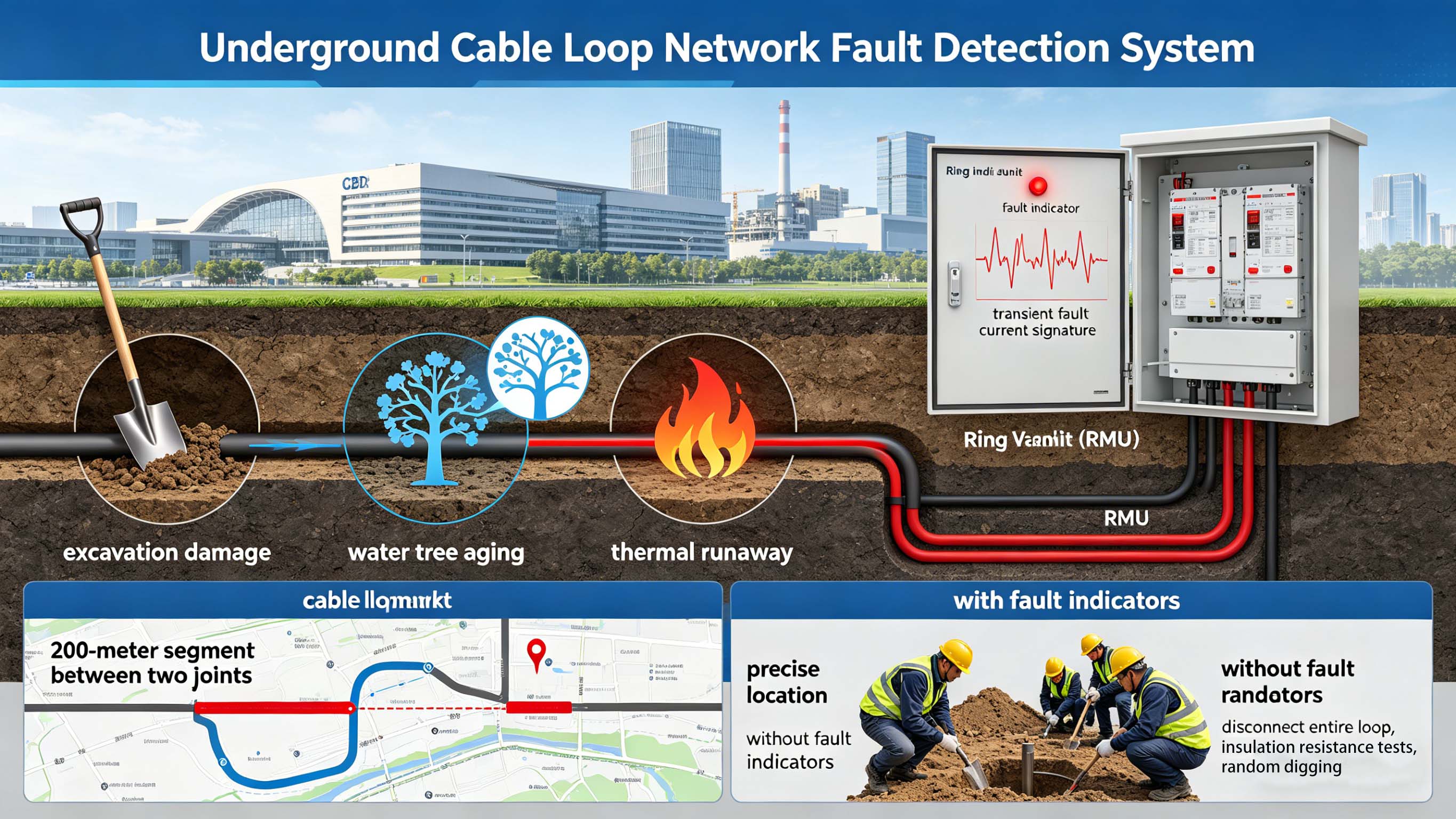
Underground cables in urban CBDs or industrial parks are prone to breakdowns caused by excavation damage, water tree aging, or thermal runaway. Unlike overhead lines, cable faults cannot be spotted visually from the street. By mounting fault indicators at each cable joint or on the panel of Ring Main Units (RMUs), the device captures the transient fault current signature when a cable section fails. The display turns red or flashes an LED, allowing crews to pinpoint the exact 200-meter segment between two joints. Without such indicators, utility teams would need to disconnect the entire loop, perform insulation resistance tests at multiple points, and potentially dig randomly—an expensive and time-consuming process.
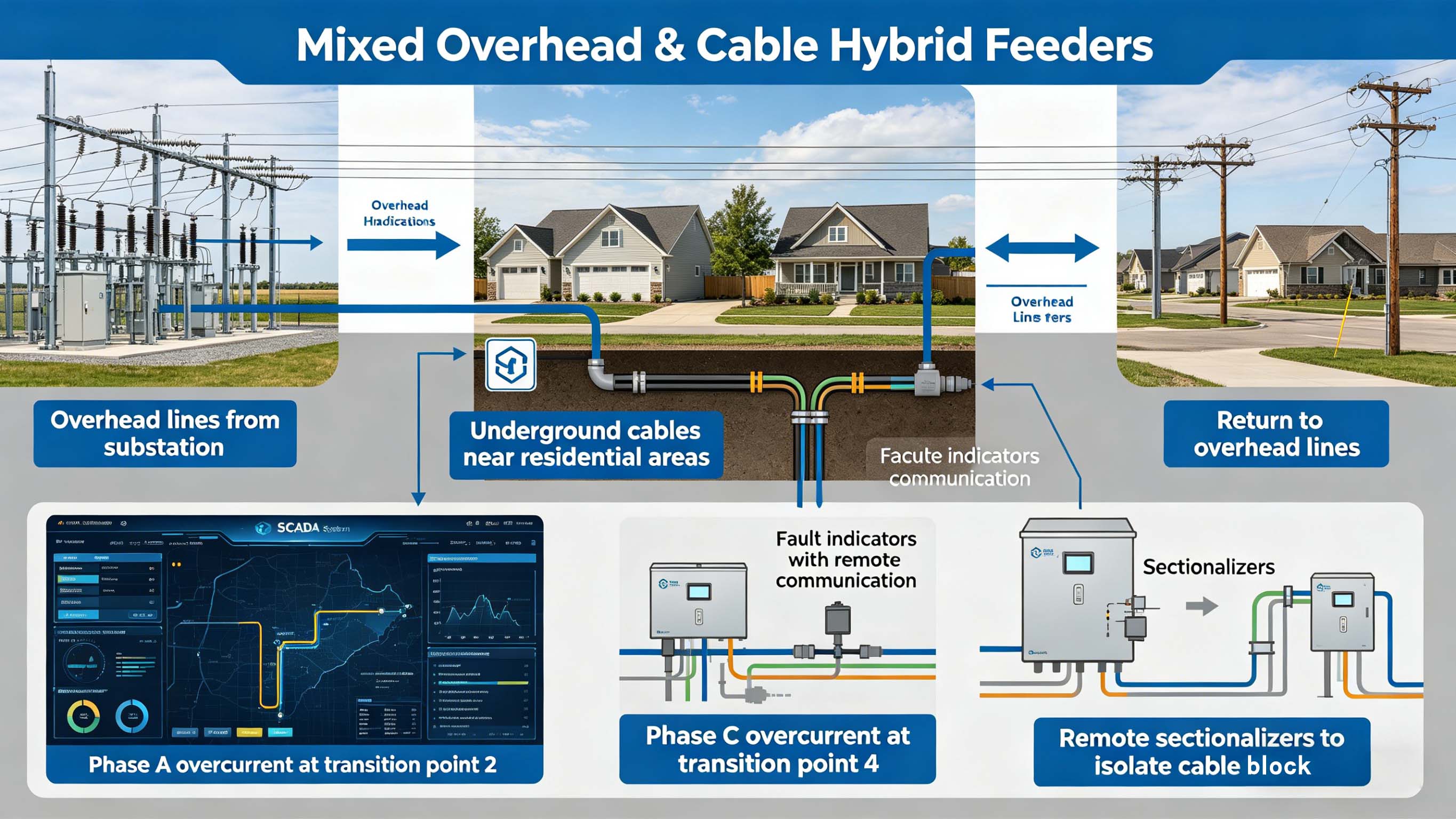
A typical suburban feeder often starts with overhead lines from the substation, transitions into underground cables near residential clusters, then returns overhead. When a fault occurs in the underground portion, upstream overhead reclosers may trip and reclose successfully if the fault is transient. However, a permanent cable fault requires immediate isolation. Installing fault indicators with remote communication at the overhead-to-cable transition points provides dispatchers with real-time fault data. The SCADA system immediately displays which phase and which transition point experienced the overcurrent. Dispatchers can then remotely open sectionalizers to isolate only the cable block, keeping the rest of the overhead line energized and maintaining power to healthy customers.
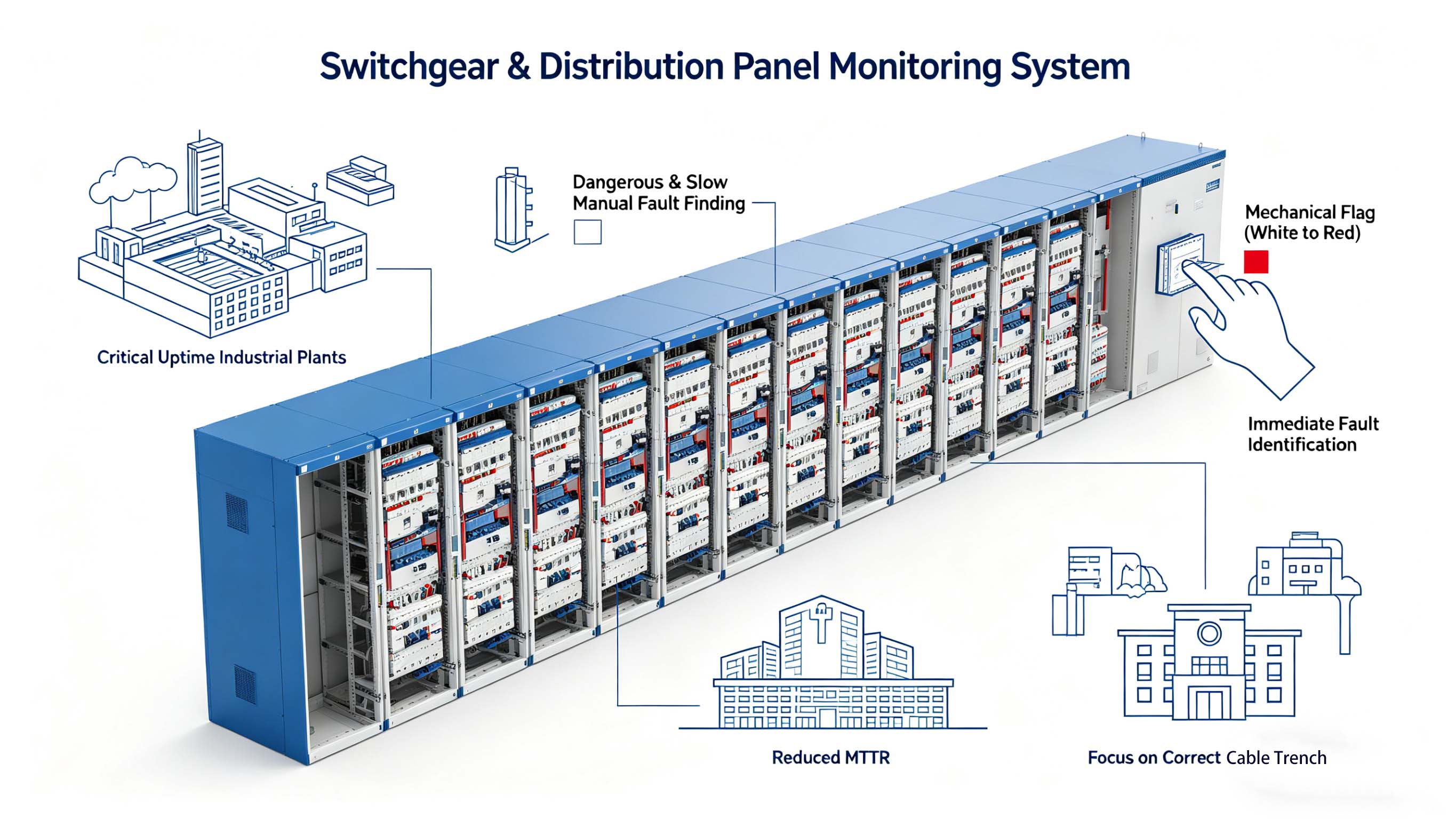
Within indoor metal-clad switchgear or secondary distribution panels, manual fault finding among dozens of outgoing feeders is dangerous and slow. Each circuit breaker panel can be equipped with a panel-mounted fault indicator connected to the relay or CT outputs. When a downstream fault trips the breaker, the corresponding indicator's mechanical flag pops from white to red, precisely identifying which feeder caused the trip. This eliminates the need to check each feeder's protection relay settings or guess which cable experienced a fault. For industrial plants with critical uptime requirements (e.g., semiconductor fabs or hospitals), this immediate identification reduces mean time to repair (MTTR) and allows maintenance crews to focus on the correct cable trench immediately.
Related Products

FRP Molded Cover Exporter for Chemical Plants, Water Treatment Factory-Direct Supply
Factory-direct FRP molded covers for chemical, water treatment, marine and industrial applications. Custom sizes, corrosion-resistant, bulk export supply. Get a quote.

FRP Molded Cover Exporter Custom Fiberglass Covers for Chemical, Marine & Construction Applications
As a direct FRP molded cover exporter, we supply custom fiberglass covers for chemical plants, marine decks, and construction sites. Factory-direct pricing, OEM sizes, fast export delivery.

FRP Molded Cover Exporter for Substations | Custom GRP Cable Trench Covers
Factory-direct FRP molded cover exporter for substations. GRP cable trench covers, equipment enclosures & transformer pads—corrosion-resistant, custom sizes, bulk OEM export.

FRP Molded Cover Exporter for Power Plants, Substations | Factory Direct Supply
FRP molded cover exporter & factory-direct supplier for power plants, substations, chemical & water treatment projects. Custom sizes, corrosion-resistant, bulk export.
Contact us immediately to discuss your product project requirements
Navigation
Navigation
Contact Us
Tel.: +86 189 3266 2725
E-mail: sale@hbfortis.com
Add.: No.8-1, Zhenxing Street, Matun Town, Zaoqiang County, Hengshui City, Hebei Province
Get in Touch
Get in Touch